
The Philosophy of the Cosmos and the Earth
The ancient indigenous faith of the Circassian people — a living code of honor, ecology, and reverence rooted in the Caucasus.
A quiet act of witness.
This site is an educational compendium. The material has been gathered and compiled by an outsider — not a keeper of the tradition — with the aim of pointing readers toward an ancient worldview that is too often overlooked. Every effort has been made to represent Khabze with respect. Corrections from practitioners and scholars are welcomed as the truer voices of the tradition.
Three pillars that hold the sky.
Thashkho
The great sky-god — the singular, unnameable source from which all lesser deities and the visible world emerge.
The Pantheon
A living council of deities of thunder, forest, hearth, harvest, and iron — each governing a domain of the natural order.
Sacred Groves
Open-air temples of oak and beech where prayer, oath, and offering are made. No walls stand between worshipper and world.
The four bearings of the way.
Khabze is less a creed than an orientation. Practitioners speak of four bearings by which every action is measured — a compass carried in the character of a person.
- Ts'ykhugh — Humanity — the highest calling of a person.
- Nemys — Reverence for elders, guests, and the sacred.
- Adygaghe — The living code of conduct — literally, 'Circassian-ness'.
- Psape — Good deeds; the pursuit of merit through kindness.
A tradition that survived exile.
The Russo-Circassian War of the 19th century and the subsequent expulsion of 1864 scattered the Circassian people across Turkey, Jordan, Syria, and beyond. Today, Khabze survives in a diaspora of some five to seven million, alongside smaller communities in the historical homeland of the North-West Caucasus.
A quiet revival is underway. In Kabardino-Balkaria, Adygea, and among diaspora scholars, Khabze is being read again — not as folklore, but as a coherent ecological philosophy unusually well suited to the questions of our own age.
Continue the journey
What it is, where it comes from, how it sees the world.
Tha, the deities, nature spirits, and the Nart sagas.
The sacred tree, the Khurey, festivals and signs.
The earth as a moral partner.
Elevated, sovereign, sacred.
Verified sources for deeper study.
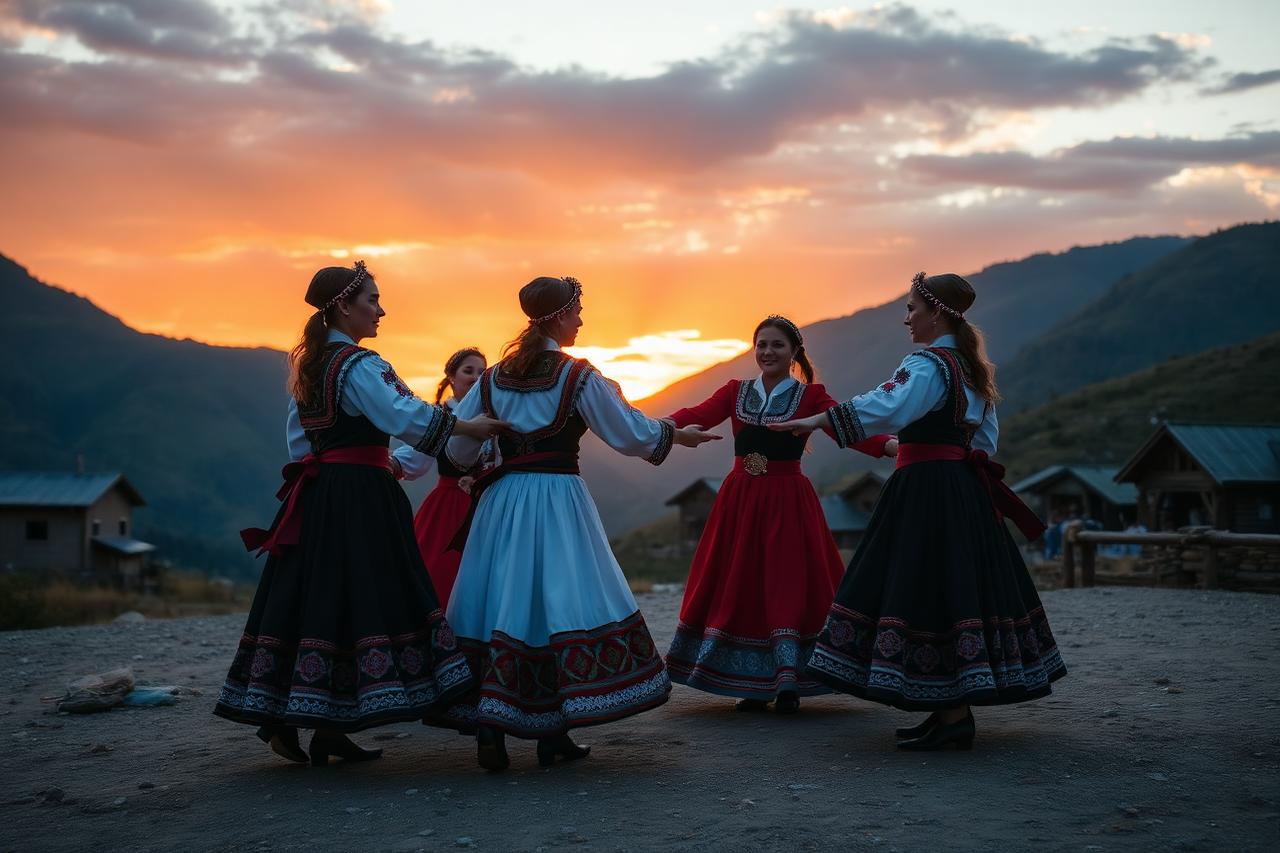
“The circle is the shape of the sun, the shape of the year, the shape of the people holding hands.”