The gods walk in the mountains.
Tha at the summit, deities at the passes, spirits at every spring — a cosmos populated by presence, not emptiness.
Tha — The Supreme
At the apex of the Circassian pantheon stands Tha (or Thashkho, “the Great Tha”). Tha is not depicted, not named lightly, and rarely addressed directly. Tha is the ground of being — closer to the philosophers' logos than to any anthropomorphic god.
Beneath Tha, a family of deities administers the domains of the visible world. They are not competitors of Tha but expressions of Tha's attention to particular things — thunder, forest, hearth, iron, harvest.
Select any card below for that deity's mythology, sacred associations, realms, offerings, colors, numbers, taboos, and a ritual.
Primary Deities
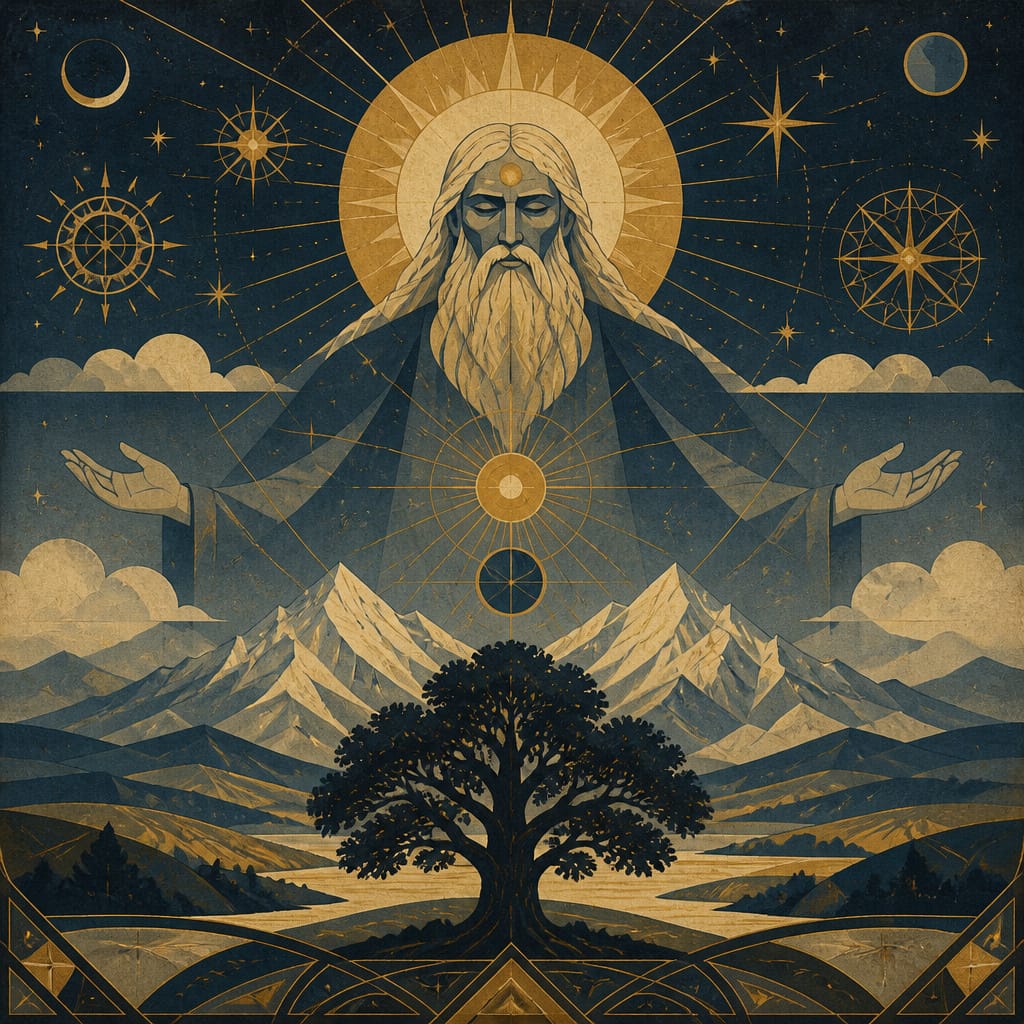
The supreme creator. Unnameable, without image, the source and coherence of all that is.
Read more →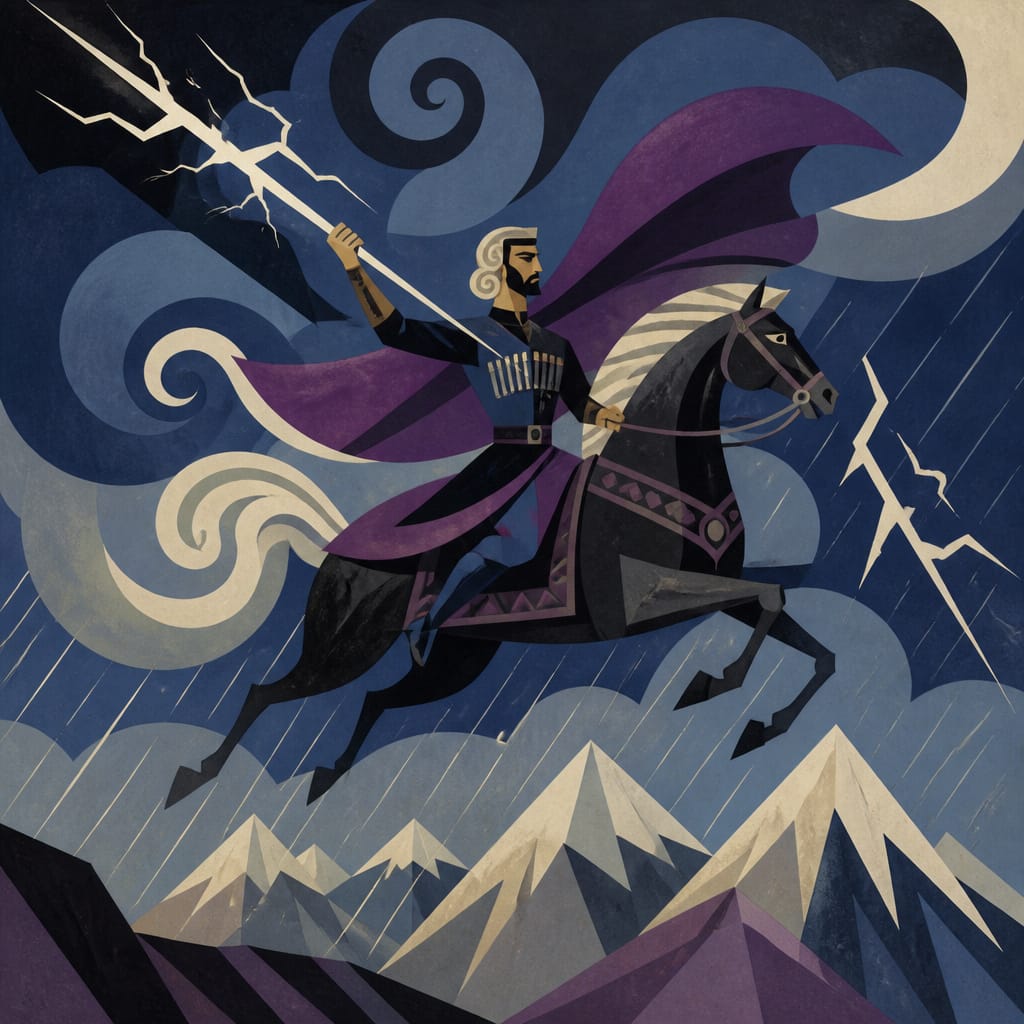
Deity of thunder, lightning, war, and justice. Those struck by lightning are considered blessed.
Read more →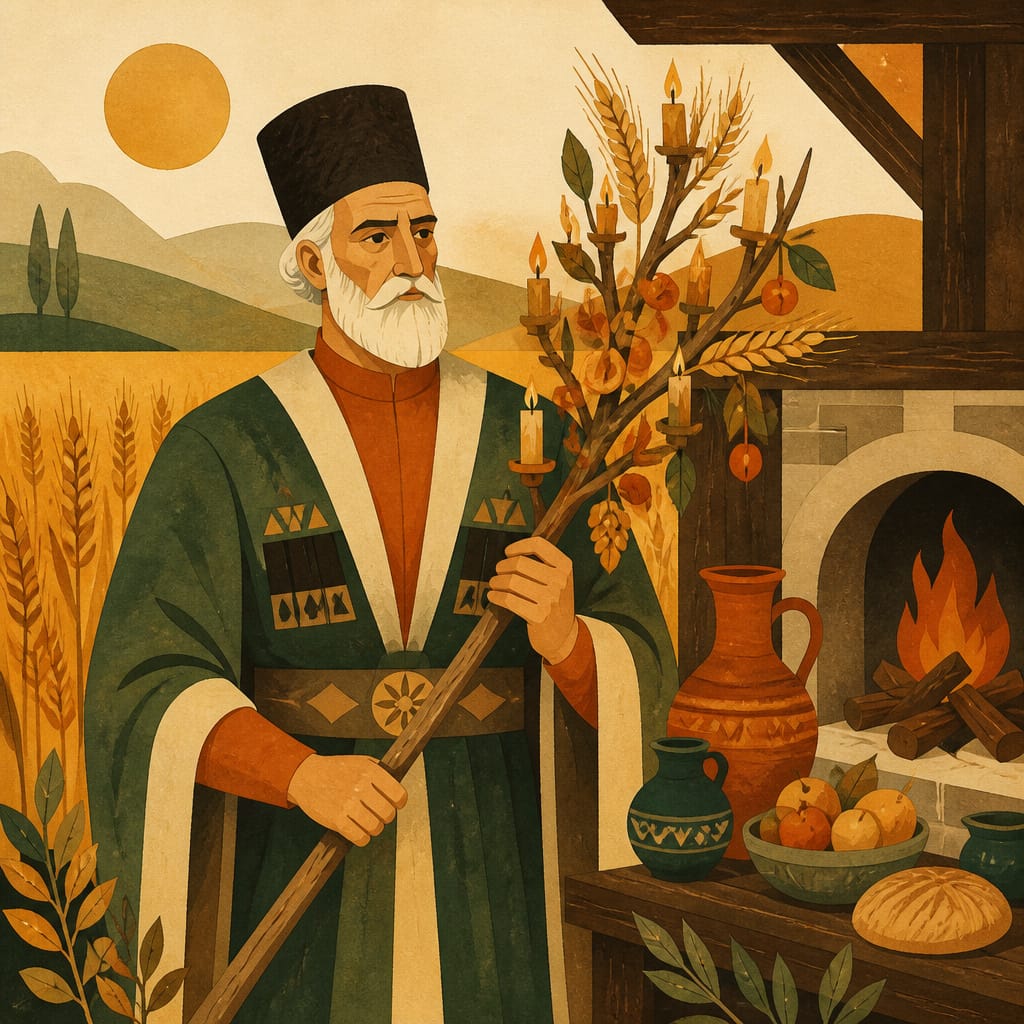
God of fertility, family wellbeing, and the harvest. Honored at the winter solstice.
Read more →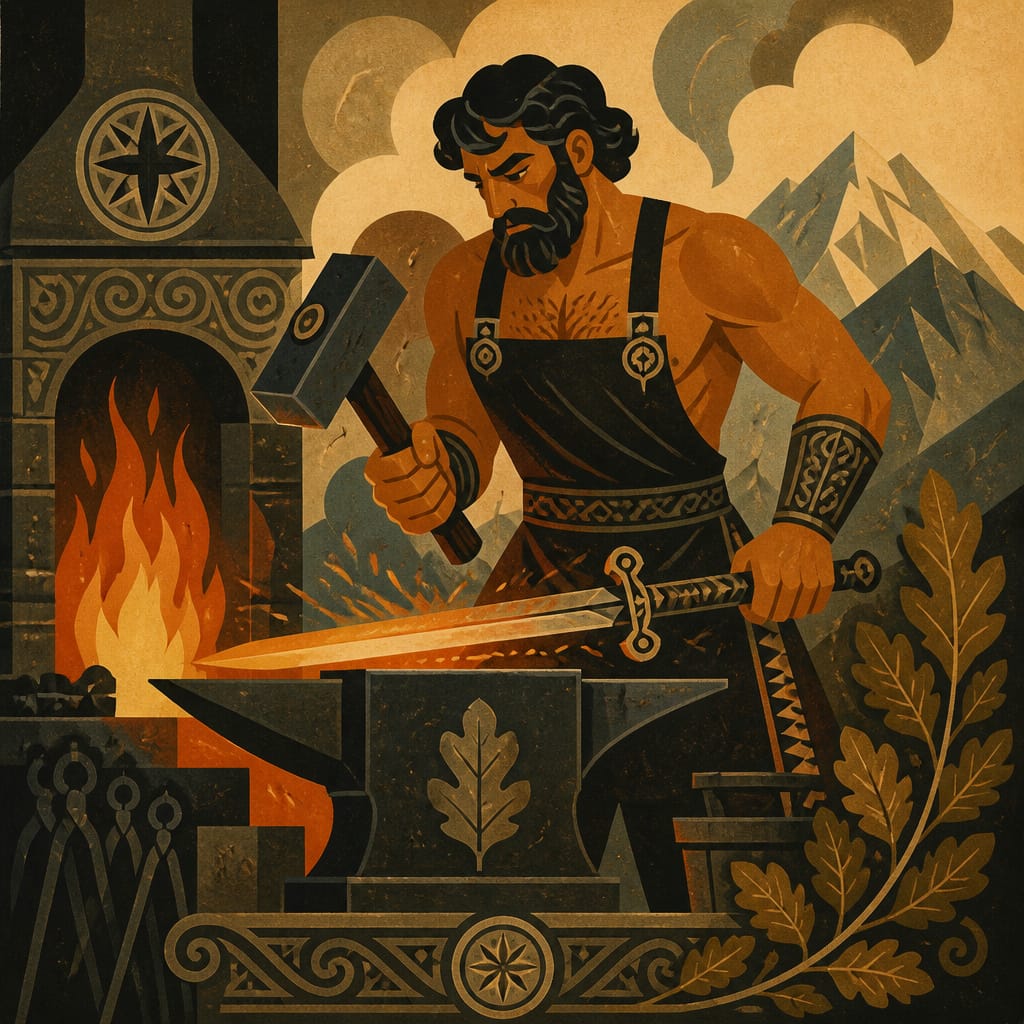
Patron of iron, craft, and fire. Teacher of the Narts.
Read more →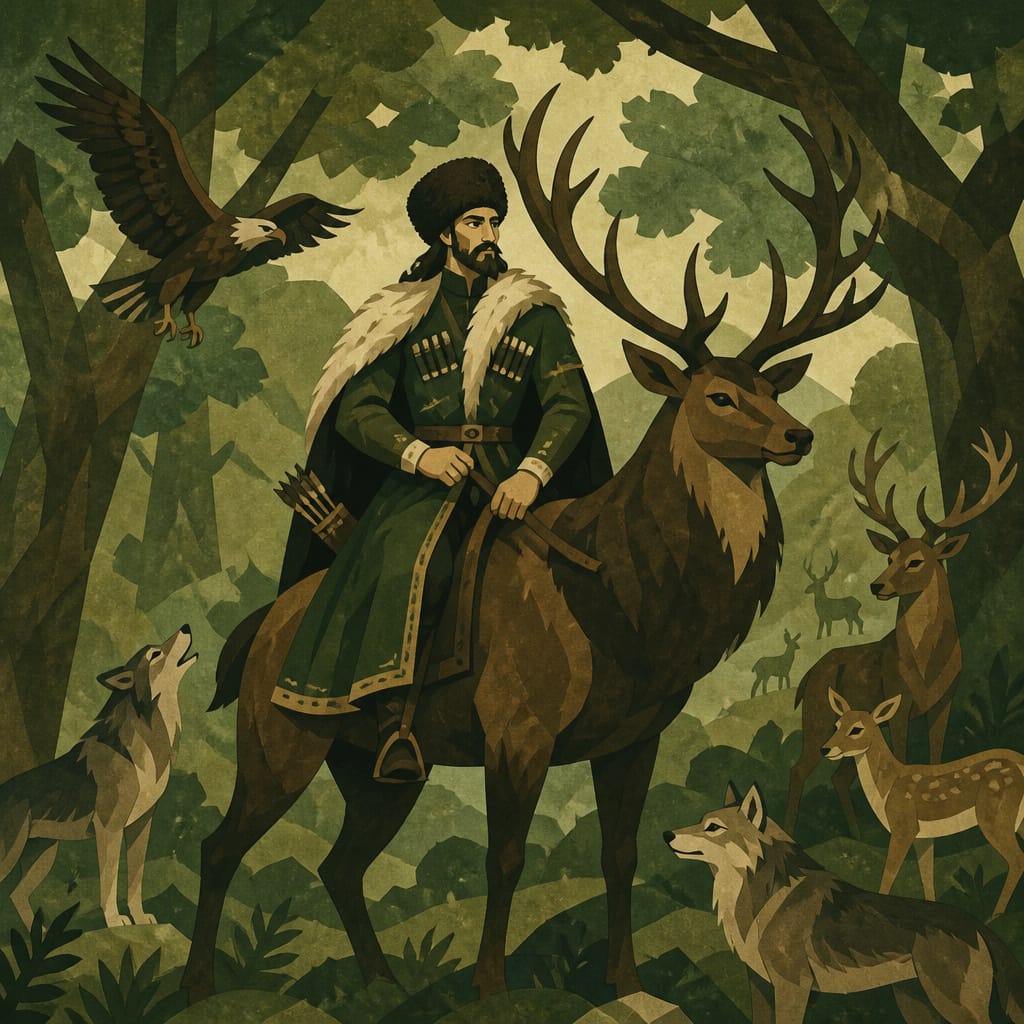
God of the forest and the hunt. The stag is his familiar; hunters ask before they take.
Read more →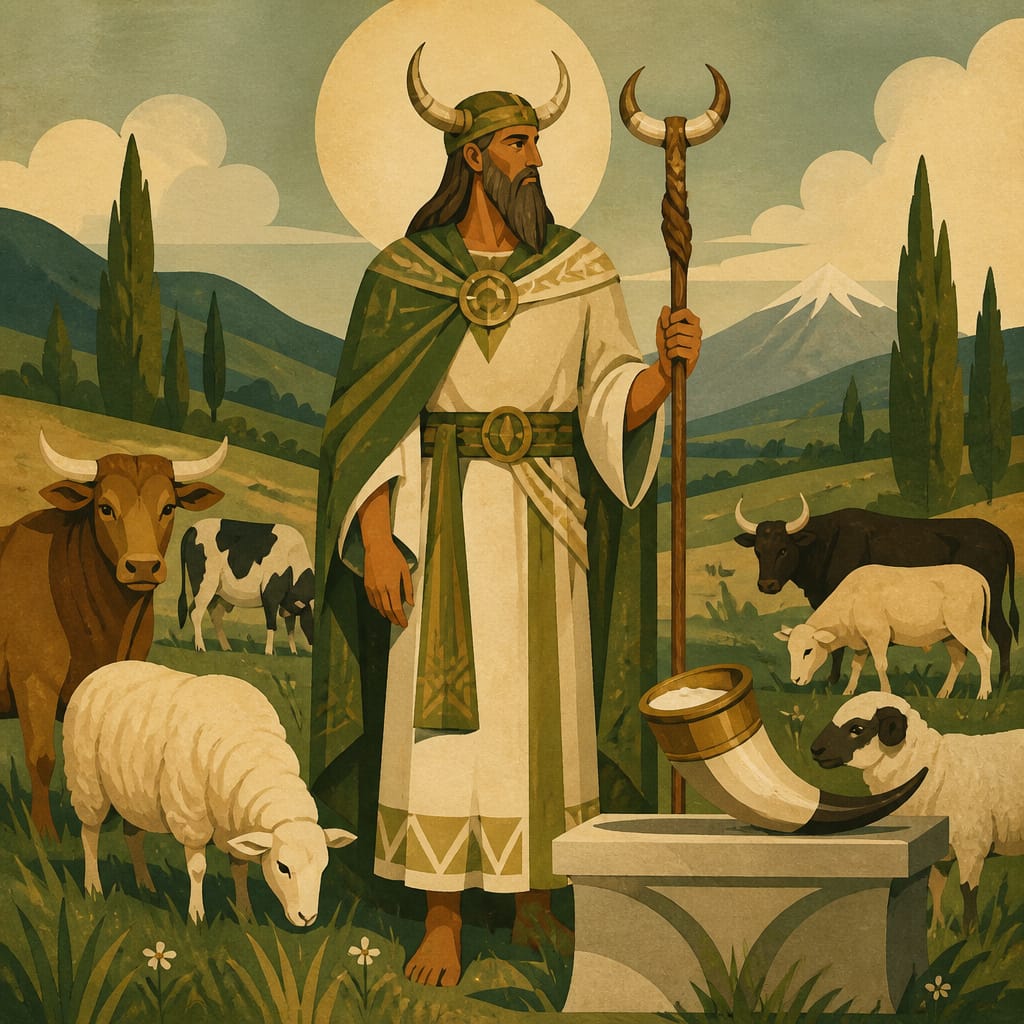
Guardian of sheep and shepherds; keeper of the flocks.
Read more →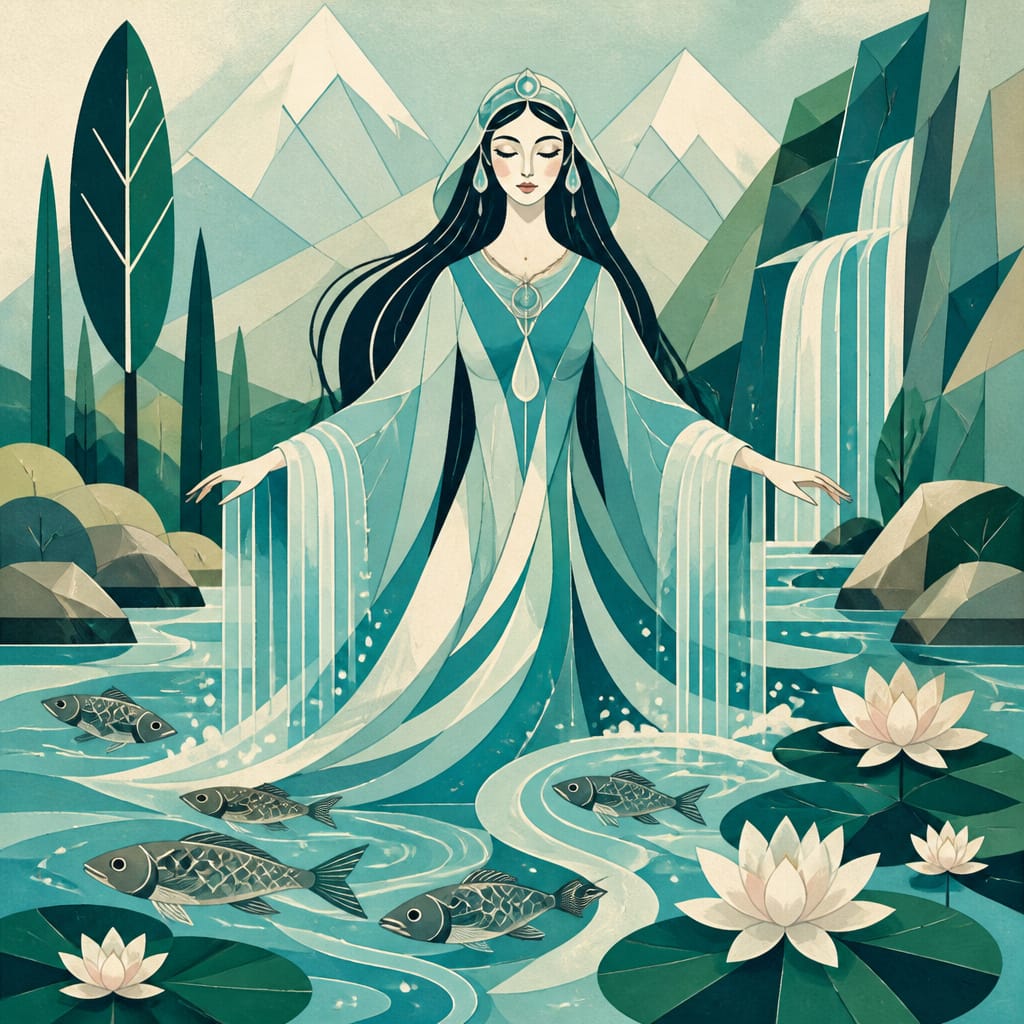
Spirit of rivers and springs — feminine, mercurial, life-giving.
Read more →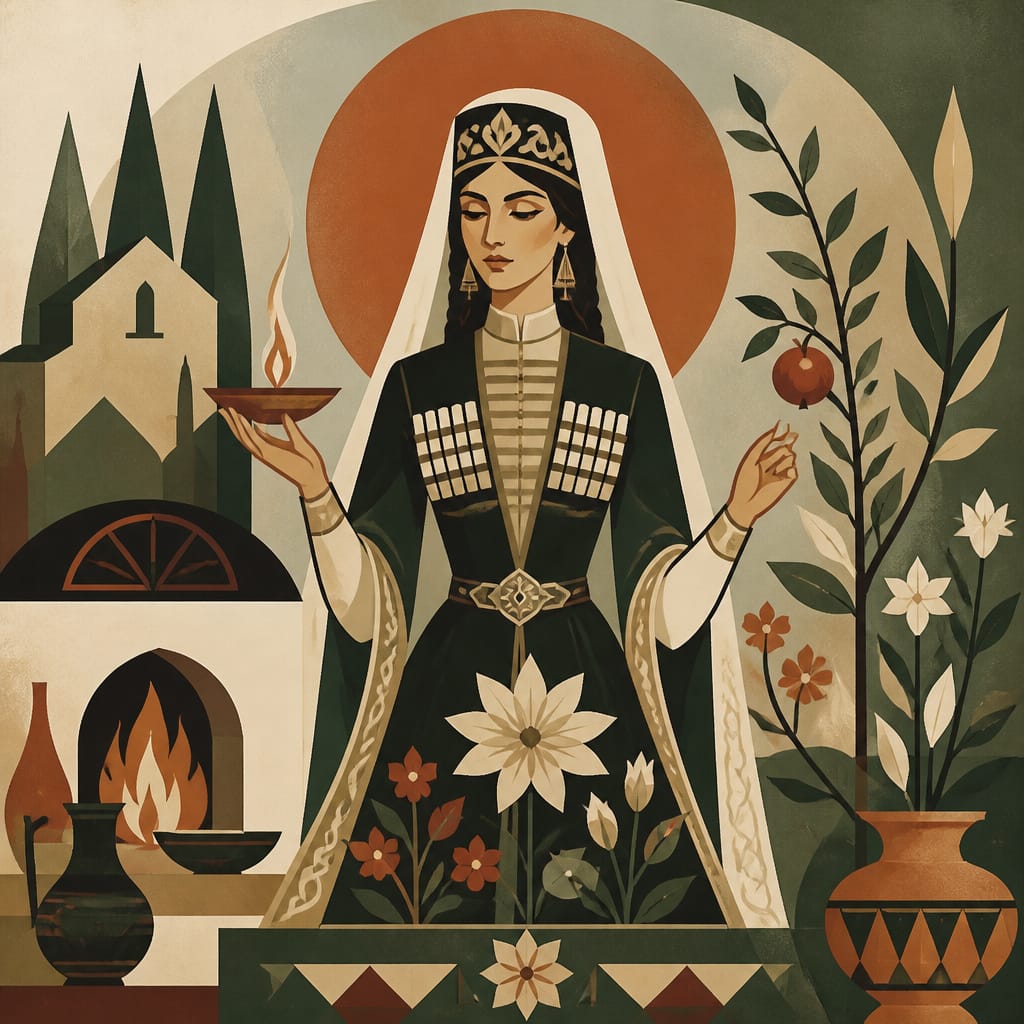
Goddess of the hearth, of gardens, and of the household's inward warmth.
Read more →Secondary Deities
Beyond the principal figures, Khabze names a wider circle of deities who preside over the sea, the sky, the mountains, the dead, and the small crafts of living — each a facet of Tha's attention.
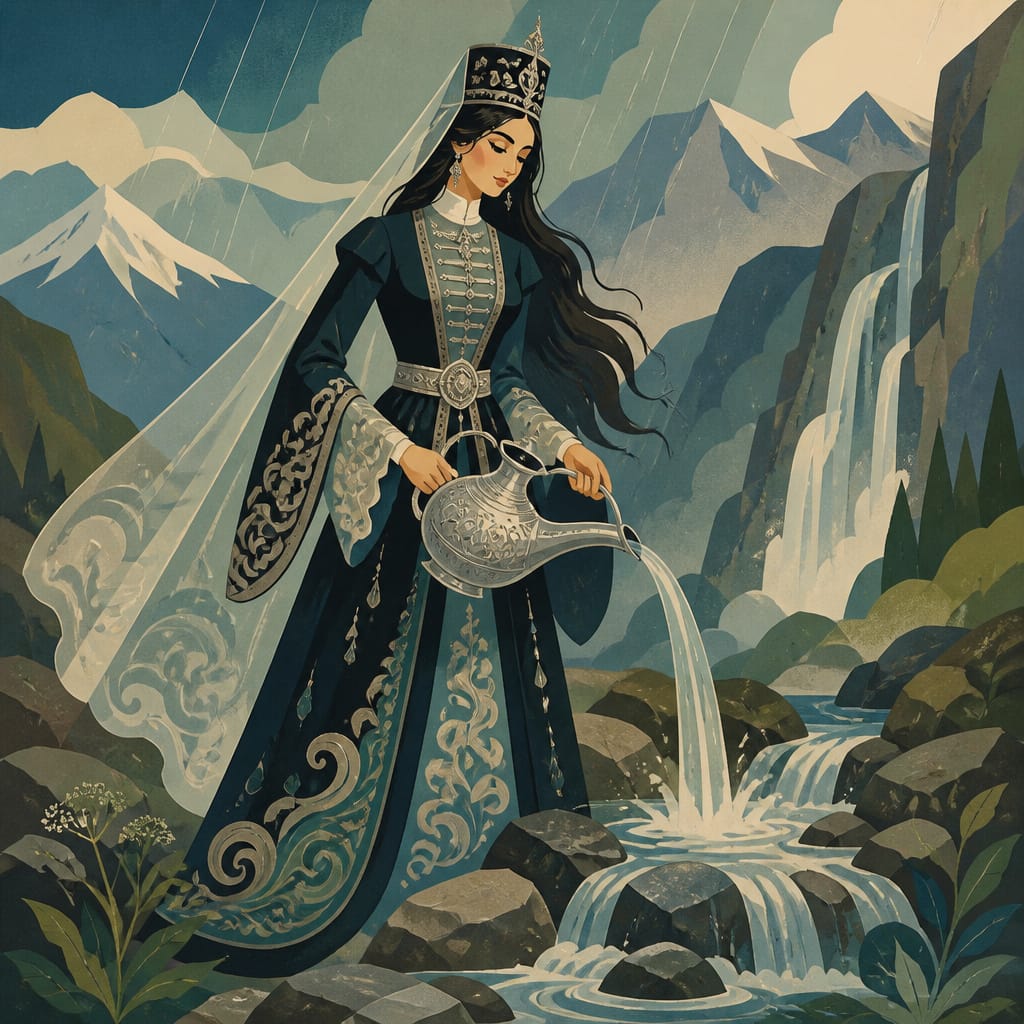
The Goddess of Water and Rain.
Read more →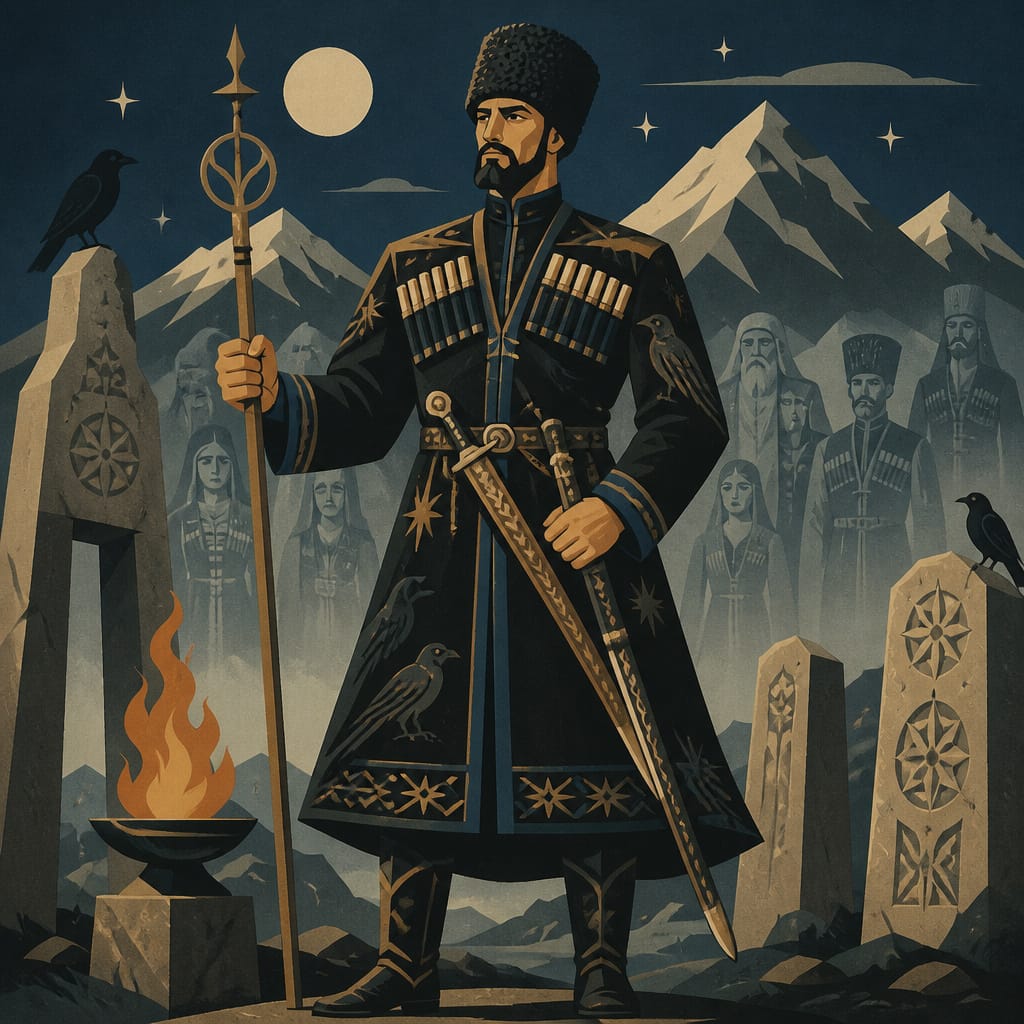
The God and Protector of the Dead.
Read more →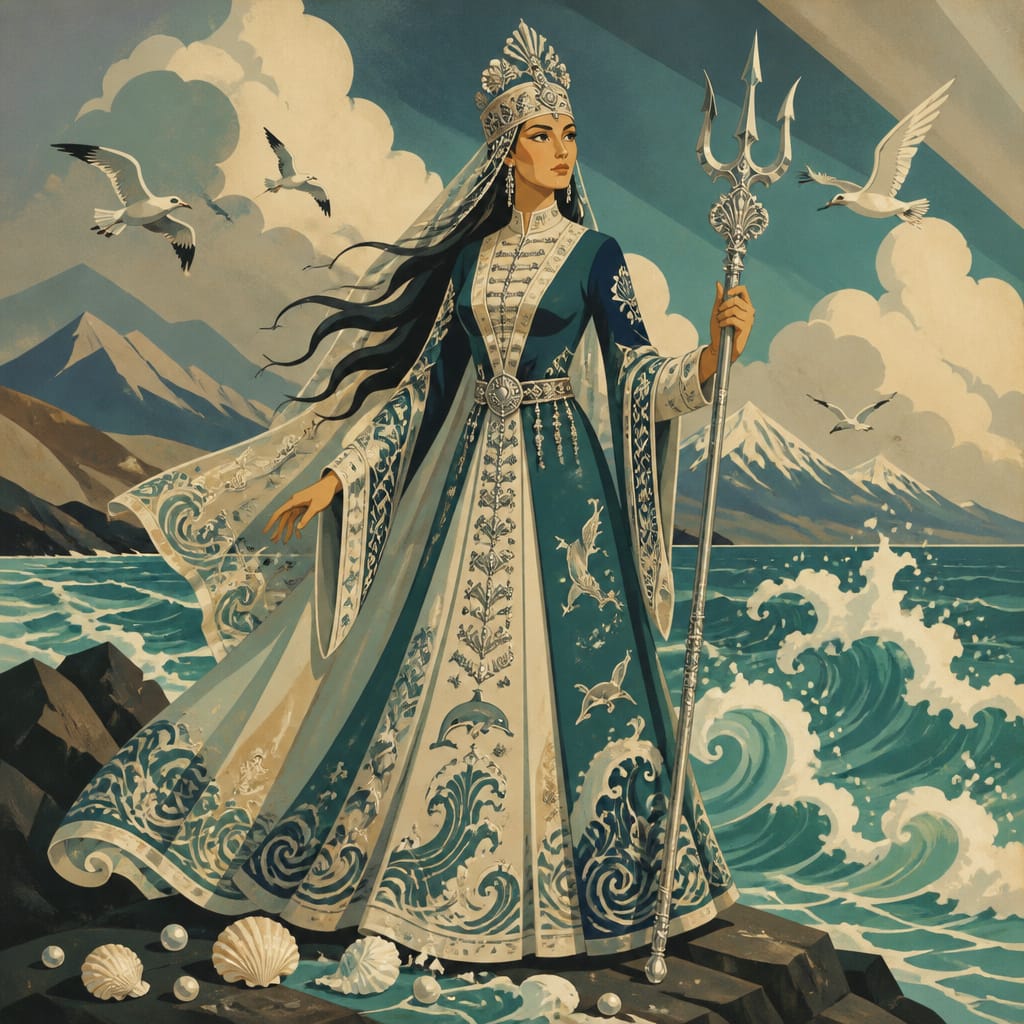
The Goddess of the Sea.
Read more →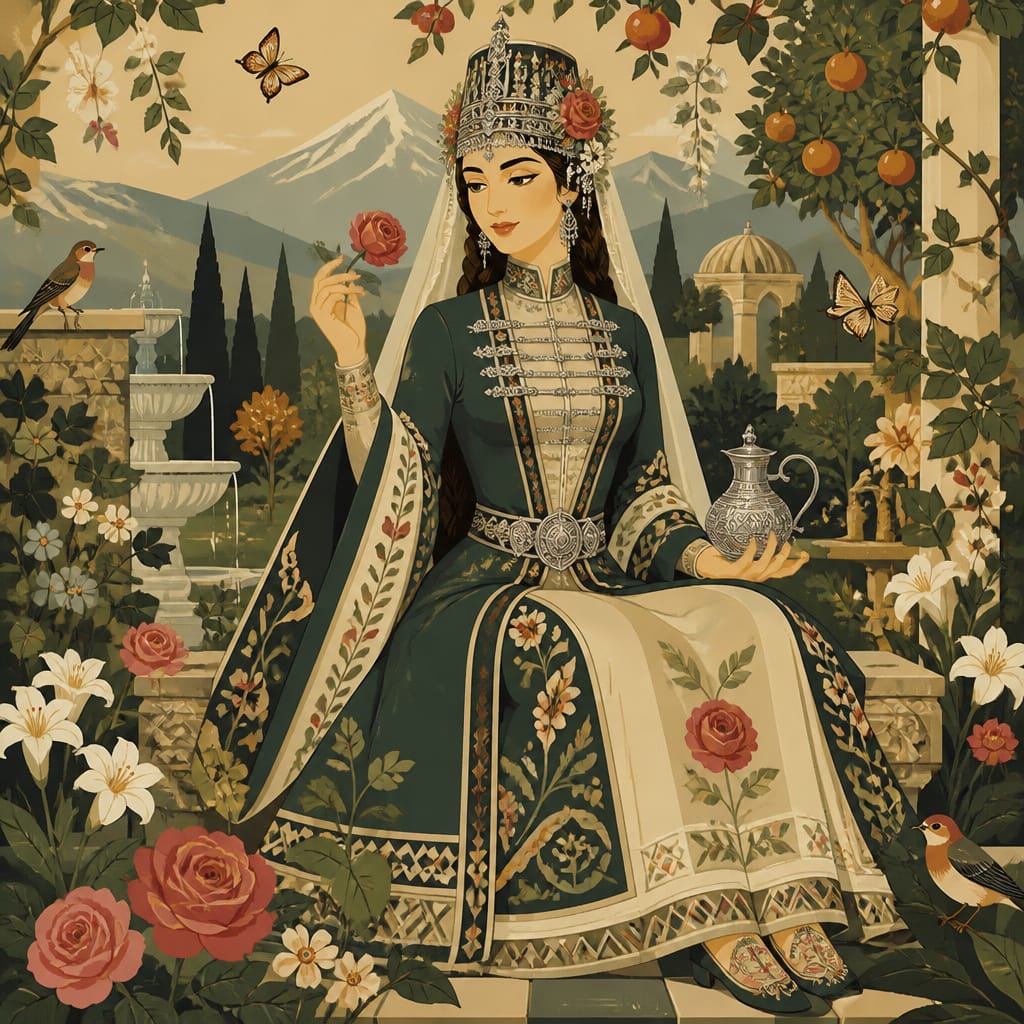
The Goddess of Beauty and Gardens.
Read more →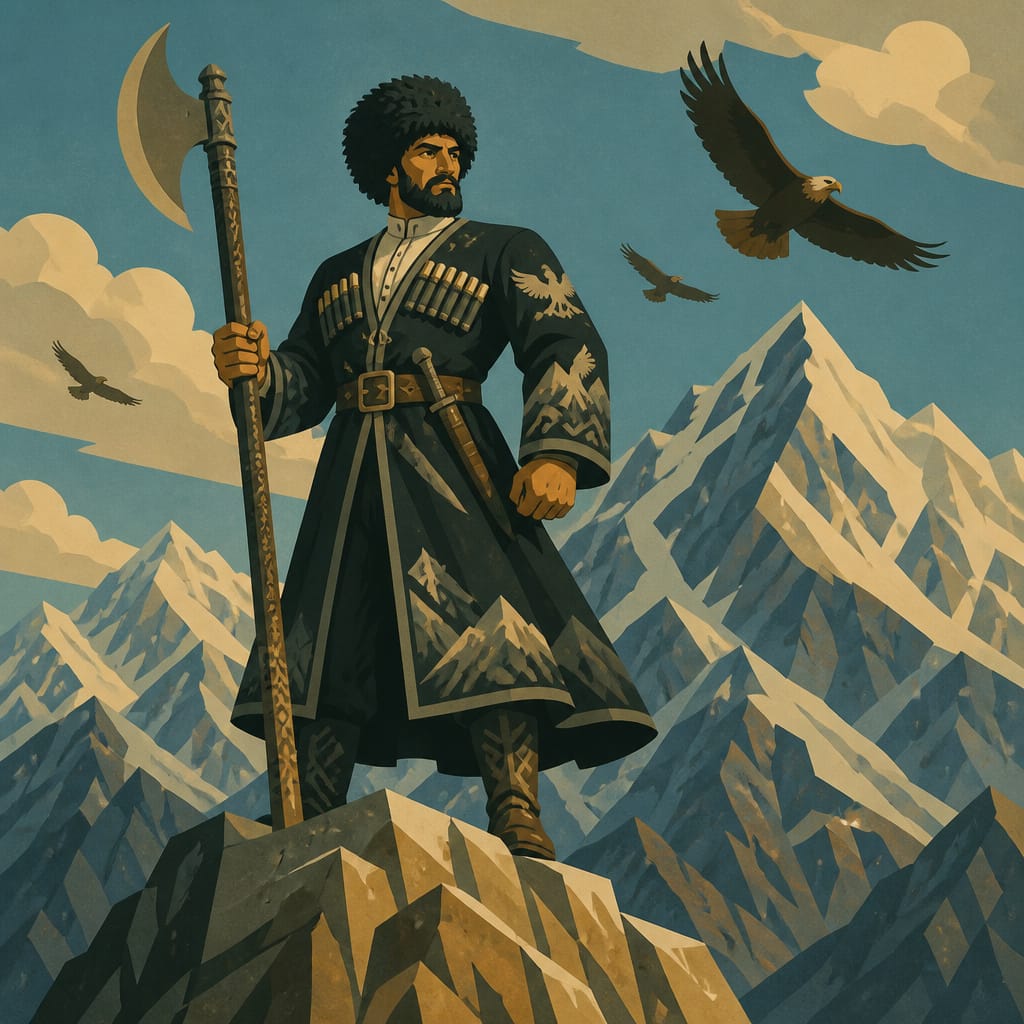
The God of Mountains.
Read more →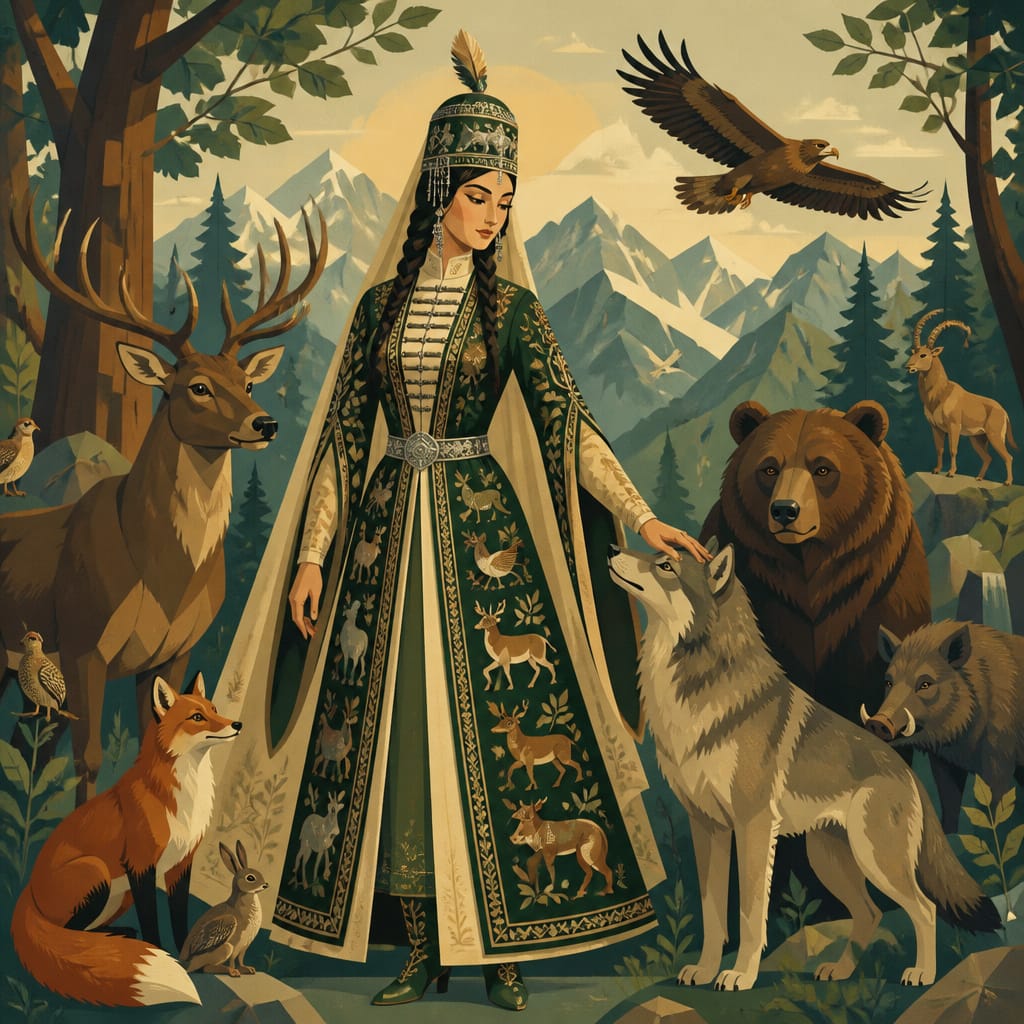
The Goddess of all Fauna.
Read more →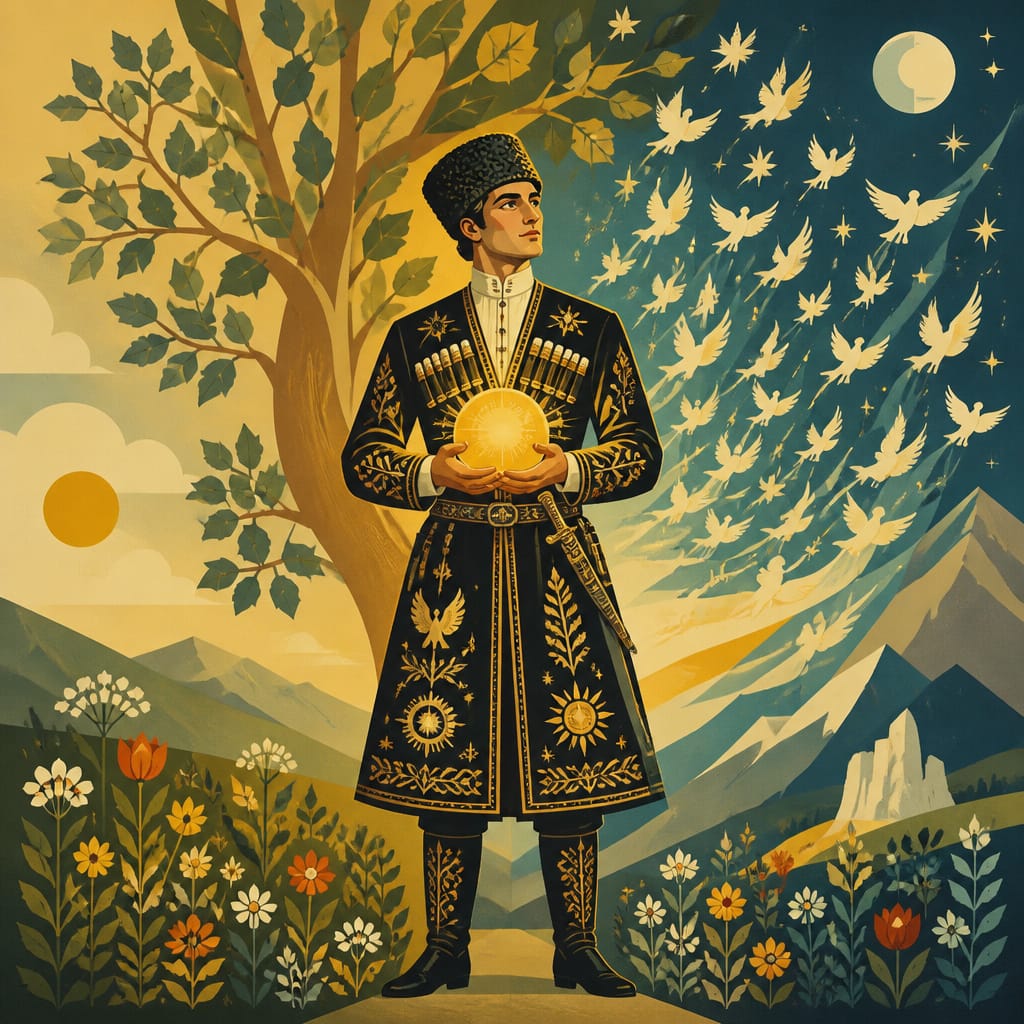
The God of Life and Souls.
Read more →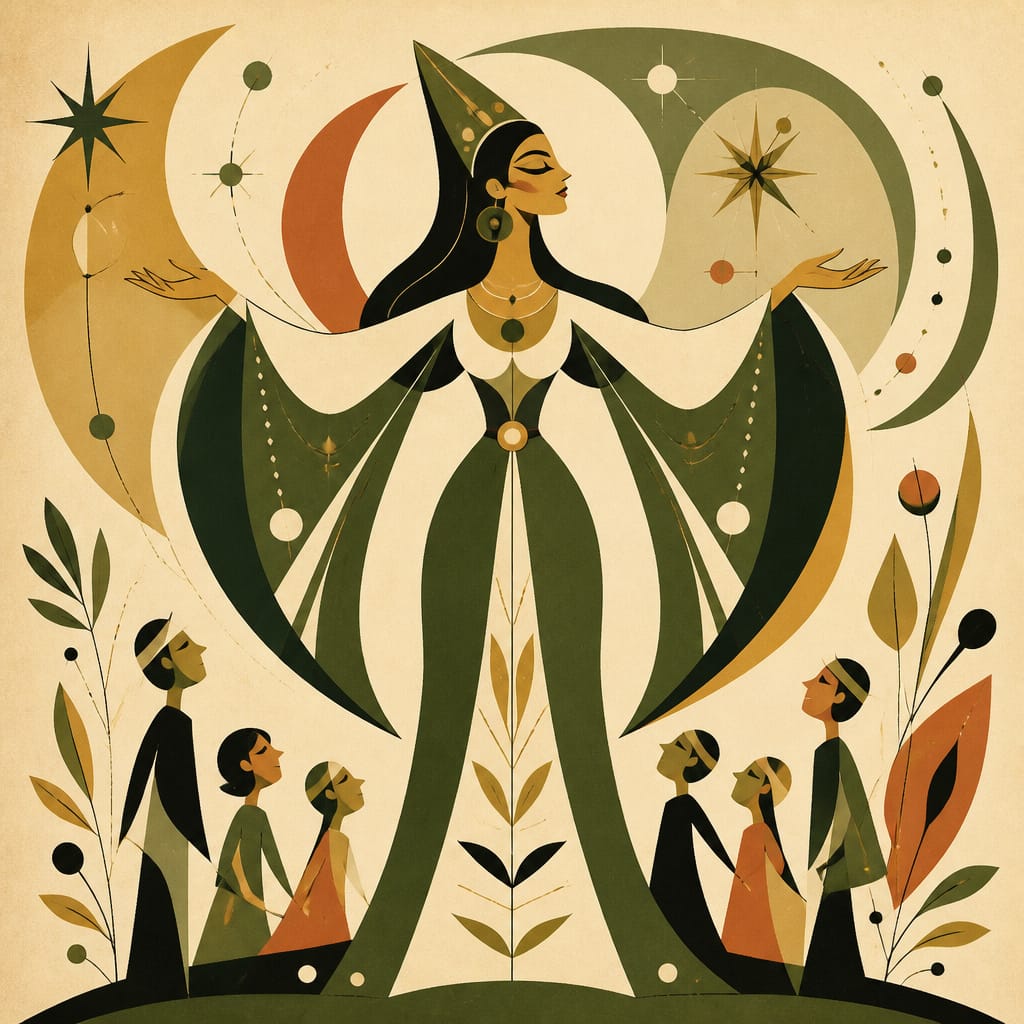
The Goddess of Femininity and Fertility, Mother of the Narts.
Read more →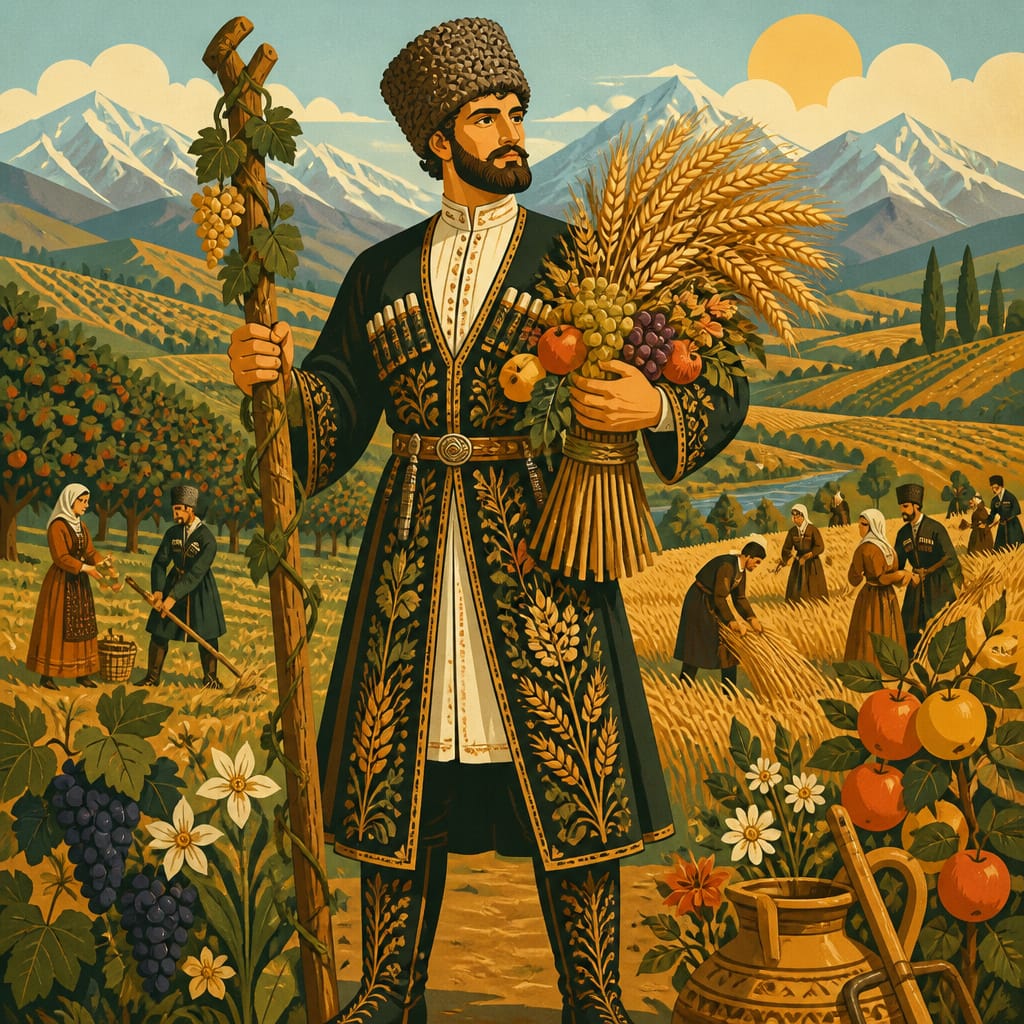
The God of Flora and Crops.
Read more →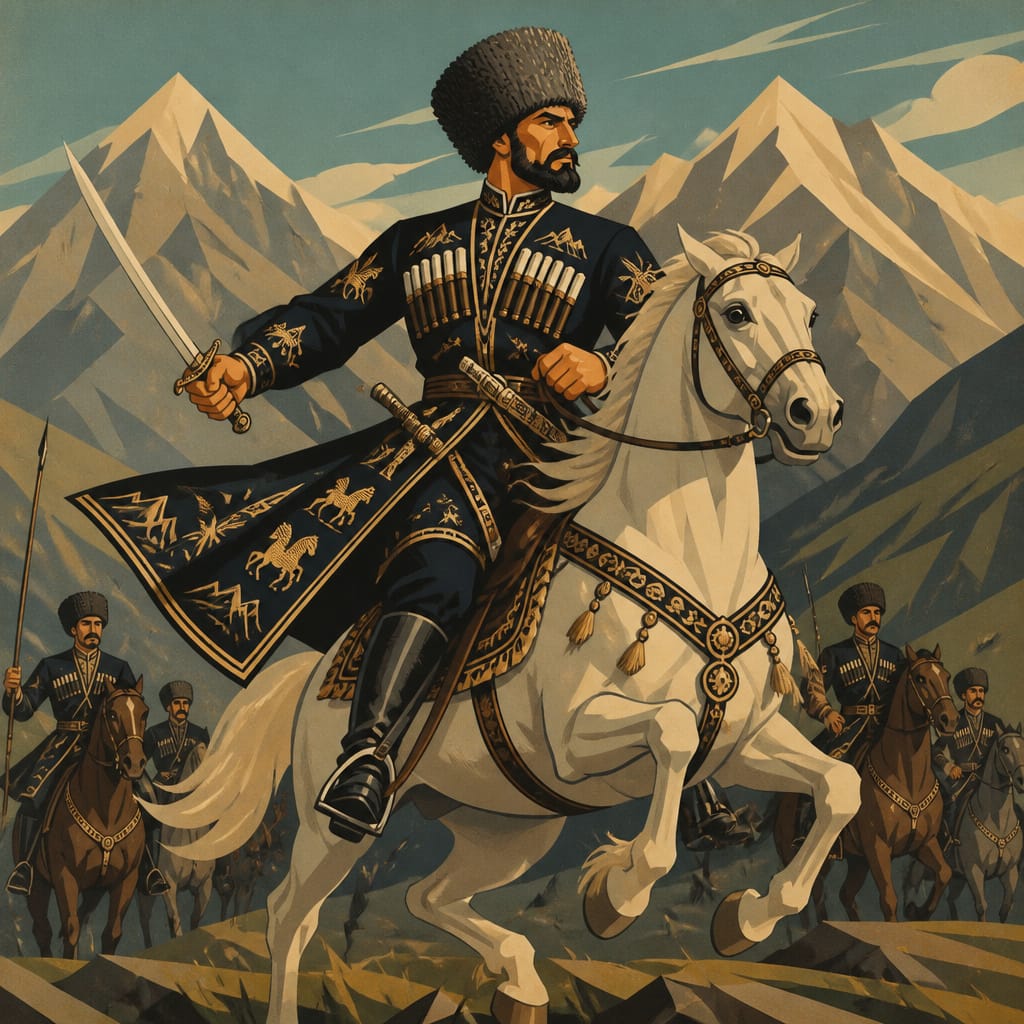
The God and Protector of Horsemen.
Read more →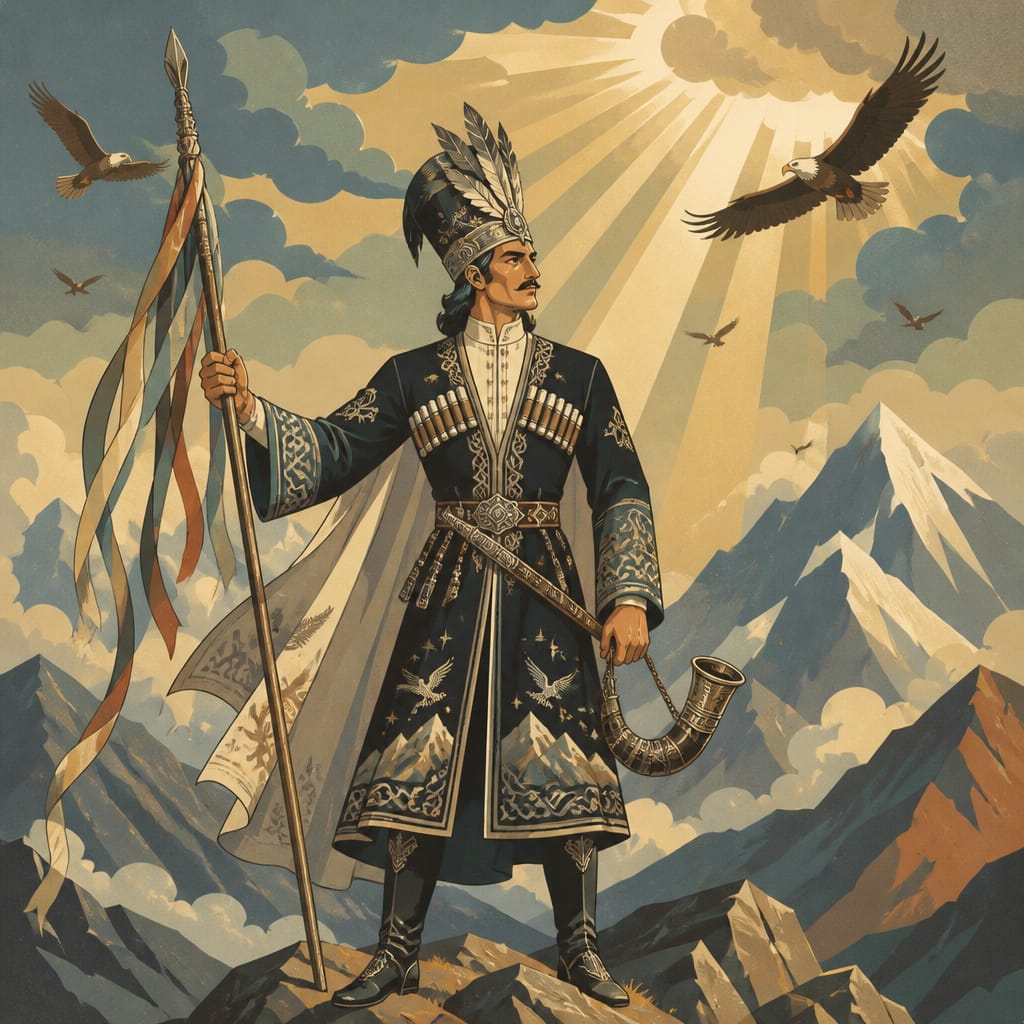
The Herald of Theshxwe.
Read more →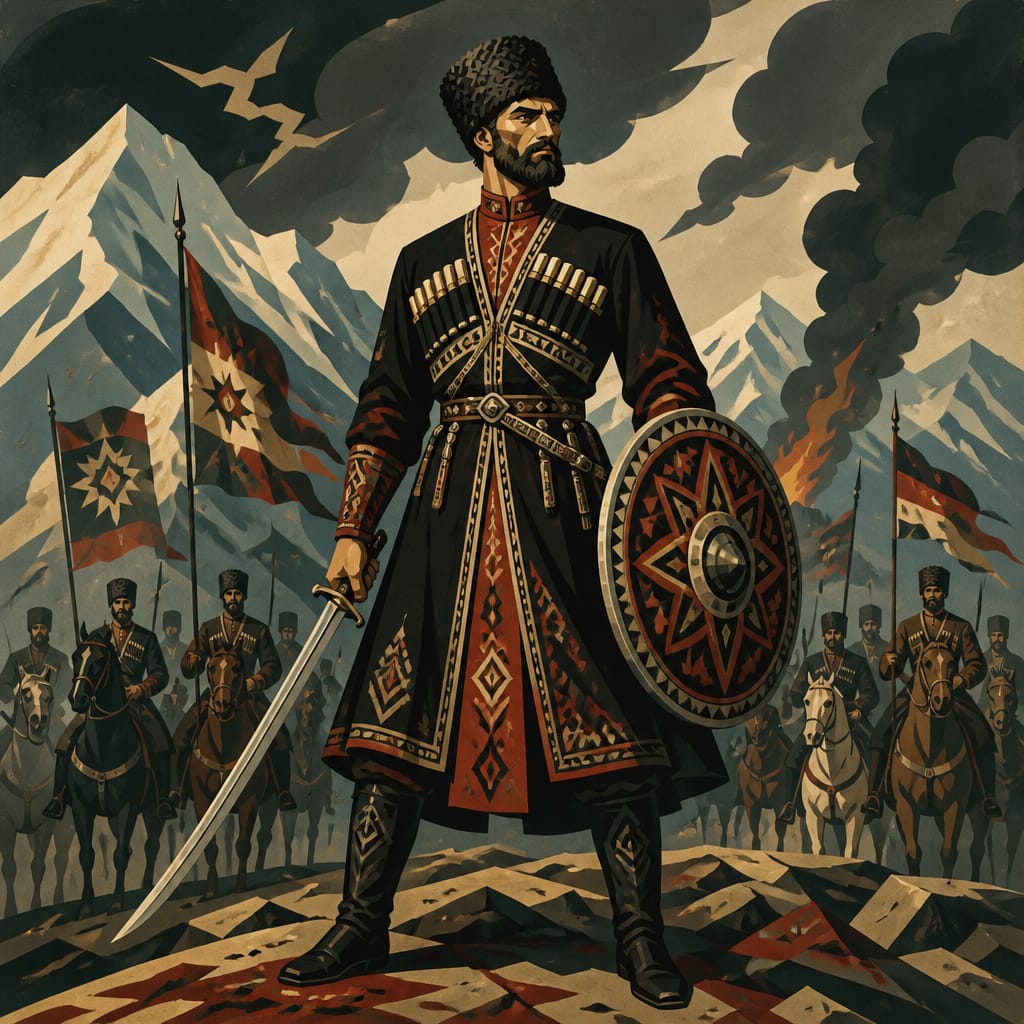
The God of War and Bloodshed.
Read more →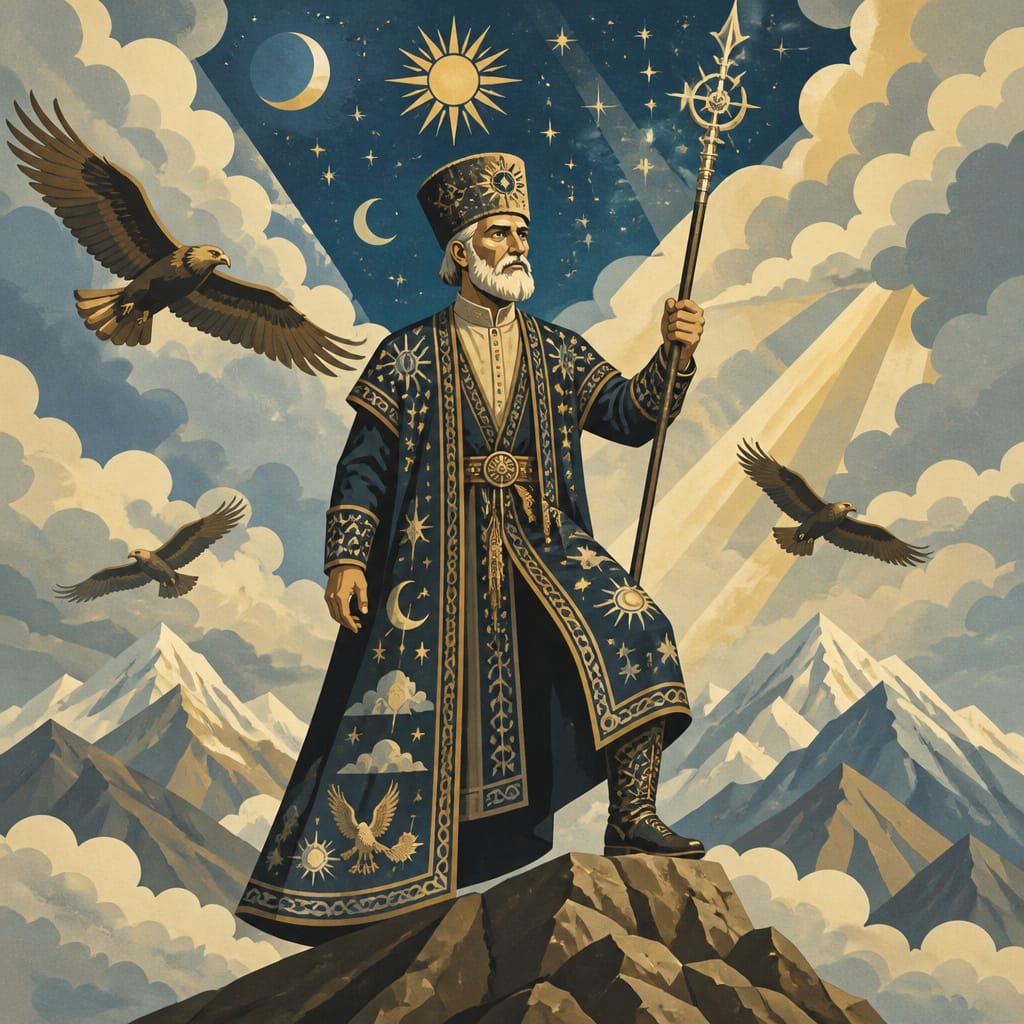
The God of the Skies.
Read more →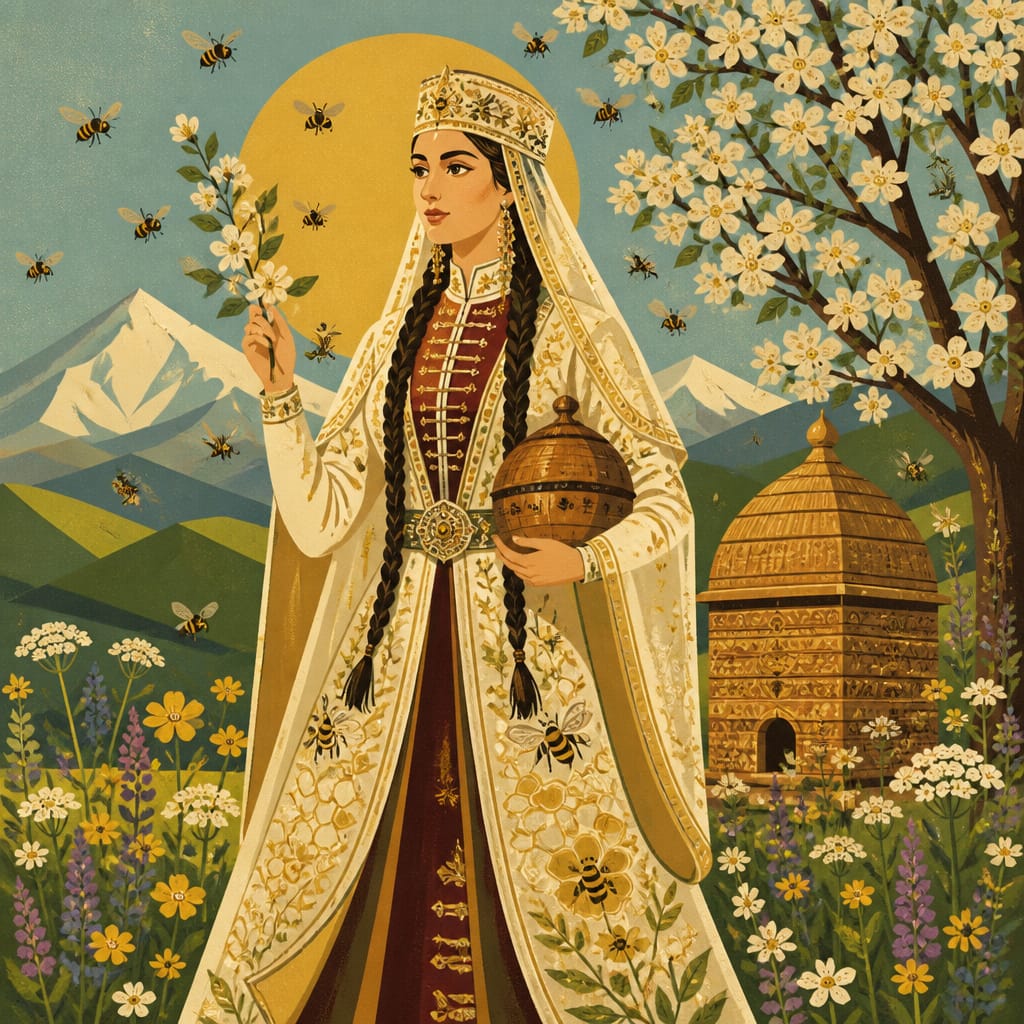
The Goddess and Protectress of Bees.
Read more →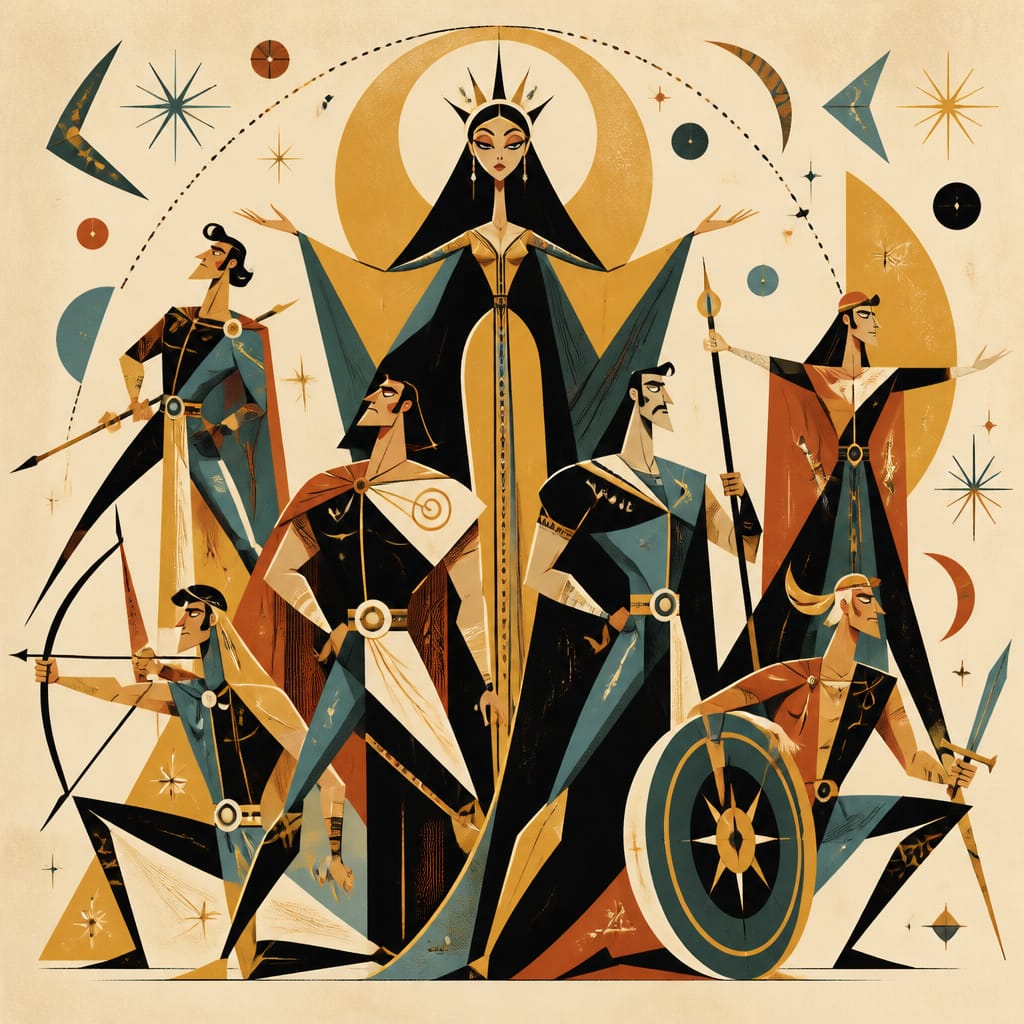
Demigods of the eponymous Saga, born of their mother Sataney.
Read more →Nature Spirits
Alongside the named deities, Khabze recognizes a dense population of place-spirits: the guardian of a spring, the presence in an old walnut, the mood of a mountain pass. These are neither worshipped nor feared in the Western sense — they are acknowledged. A drink is poured. A word is left. Passage is asked for.
Notable among these are the Psy (water spirits), the Mez (forest presences), and the Wased (ancestral protectors of a household).
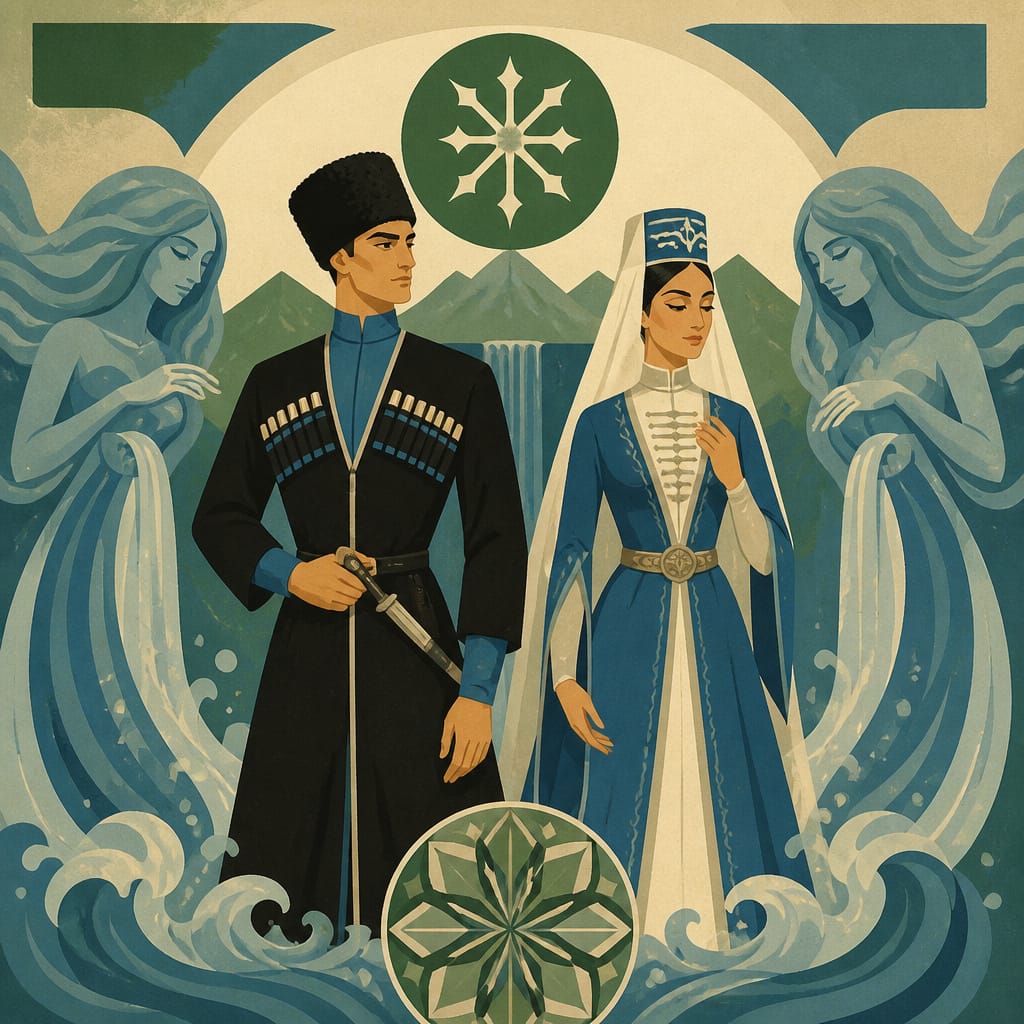
Water spirits of rivers, springs, and rain — feminine and mercurial, giving and withdrawing life.
Read more →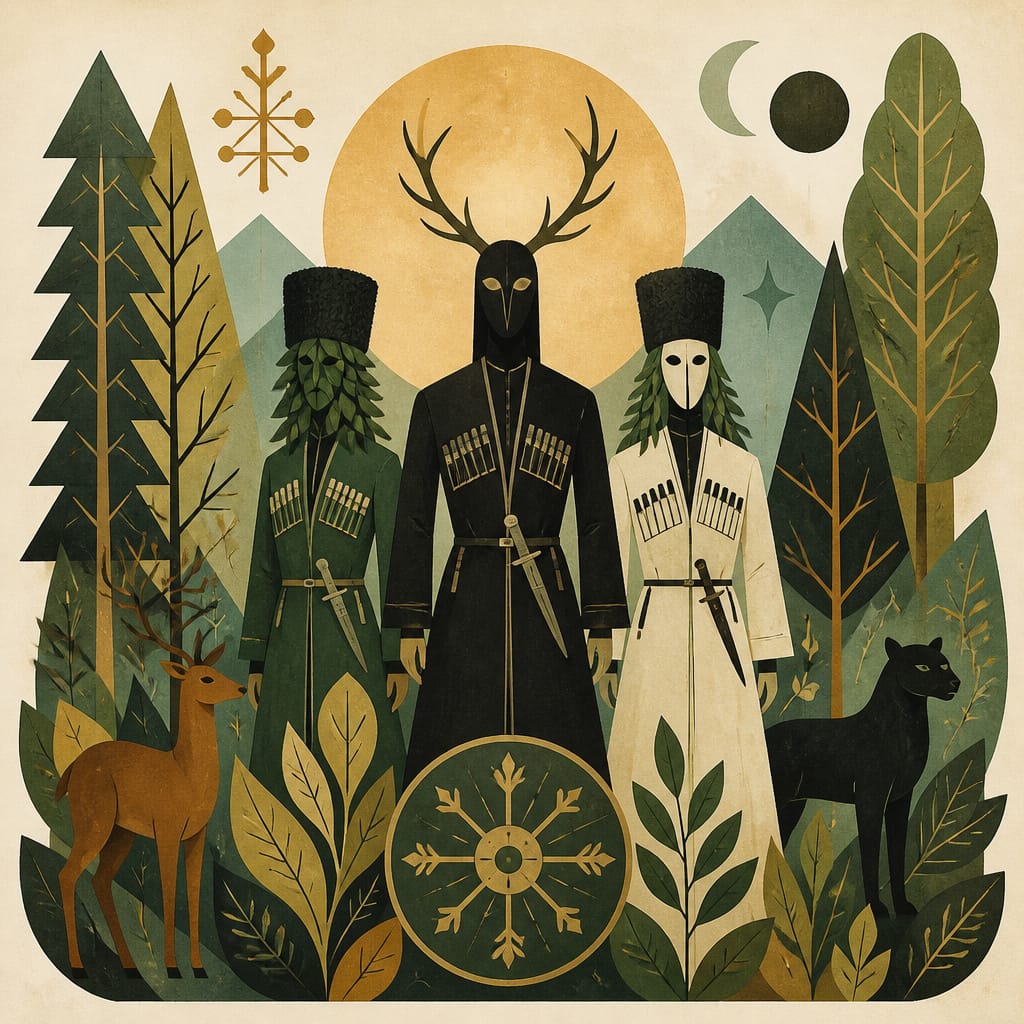
Presences of the forest — the mood of a grove, the watcher in an old walnut.
Read more →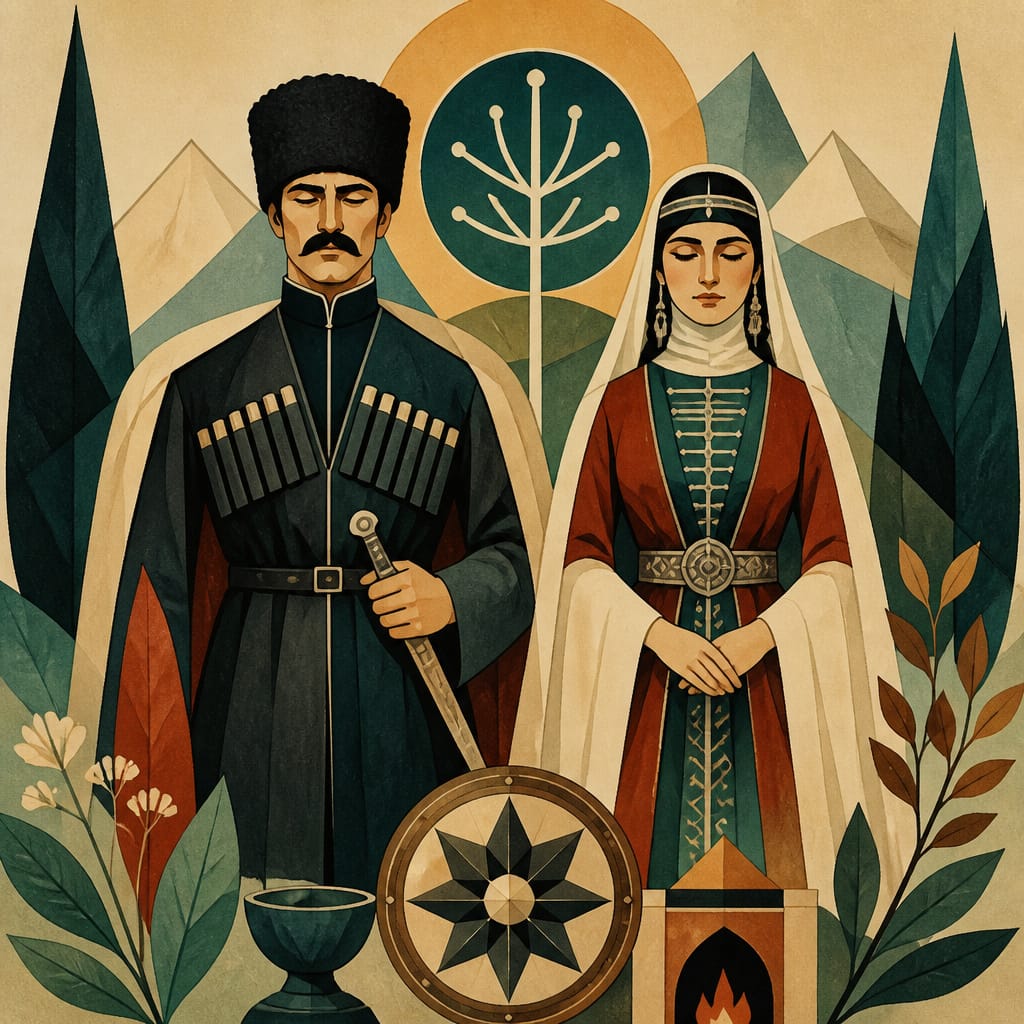
Ancestral protectors of the household — guardians of the hearth-line, honored at family rites.
Read more →The Nart Sagas
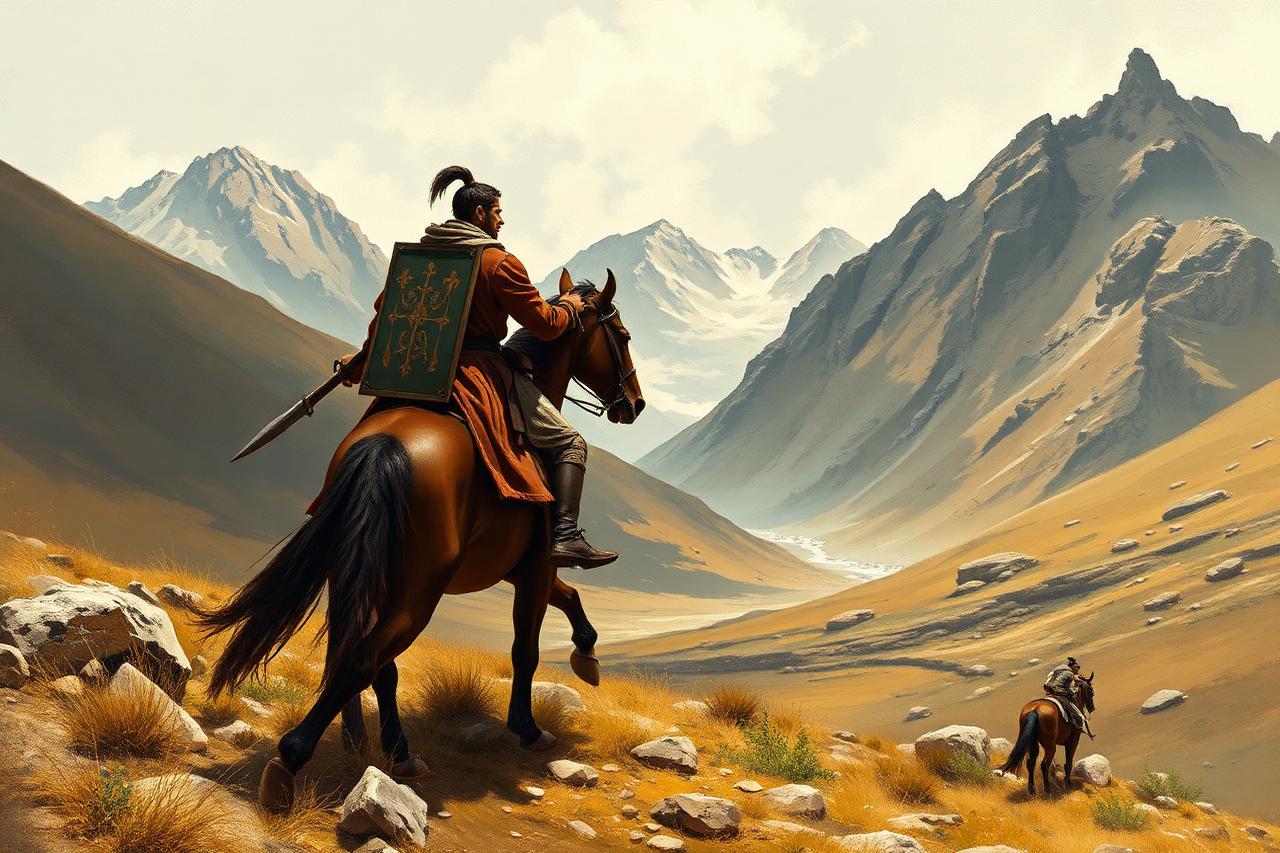
The Nart Sagas are the great epic cycle of the North Caucasus — a body of oral literature shared, in variant forms, by Circassians, Abkhaz, Ossetians, and other peoples of the range. They tell of the Narts, a race of giant-hearted heroes who lived in the age before ours: Sosruko the trickster born of stone, Setenaya the wise mother of the people, Batraz of the tempered heart, Pataraz the avenger.
For Khabze, the Nart cycle is neither scripture nor mere folklore. It is the tradition's mirror — a way of teaching honor, restraint, cunning, and grief through story, so that the values of Khabze pass from one generation to the next in the voice of a grandmother, not the voice of a law.