A faith lived in gesture.
Khabze has few doctrines and many practices. The teachings live in what people do.
The Sacred Tree
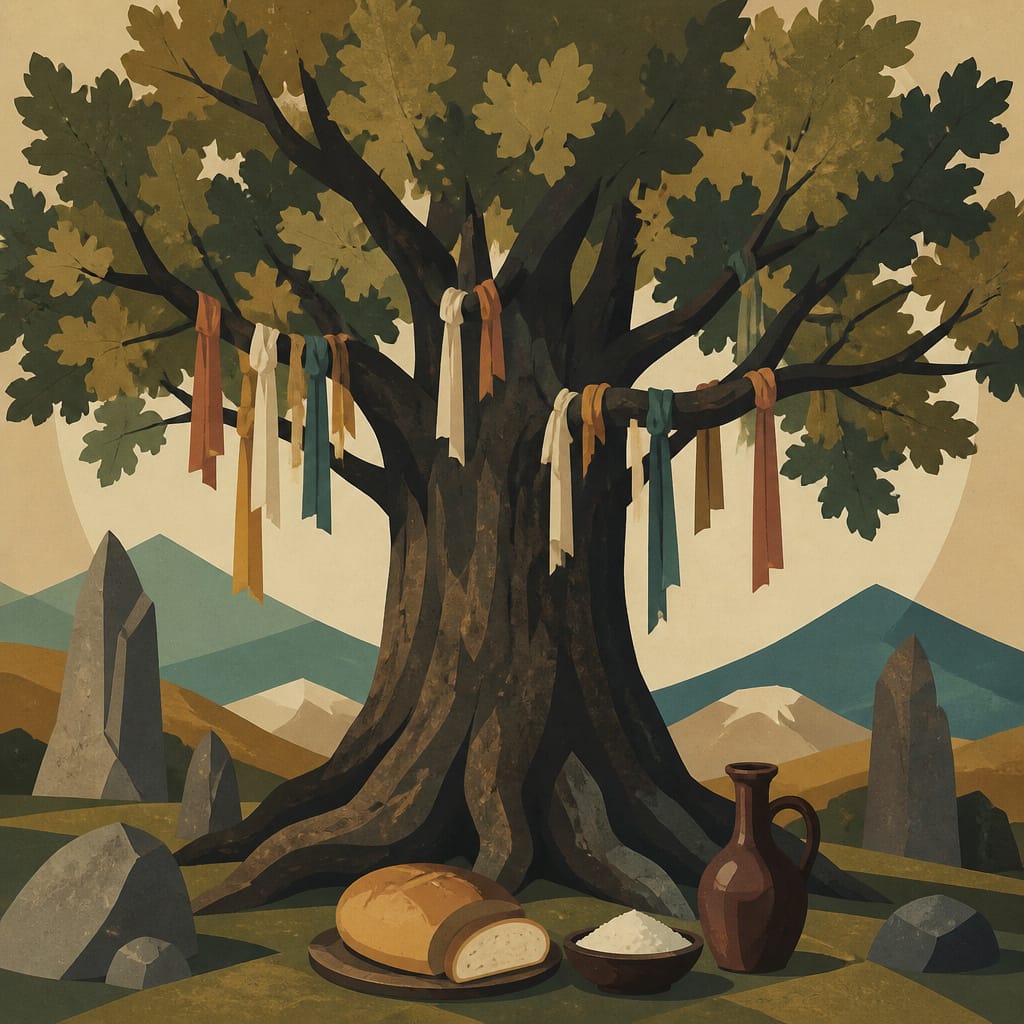
At the heart of many Circassian sanctuaries stands a single old tree — most often an oak, sometimes a beech or a pear. It is not the god; it is where the god listens.
Prayers are tied to its branches as strips of cloth. Offerings of bread, salt, and wine are placed at its roots. Oaths sworn beneath it are considered binding beyond ordinary word. The tree is a vertical axis — its roots in the underworld, its trunk in ours, its crown in Tha's.
The Khurey — Circle Dance
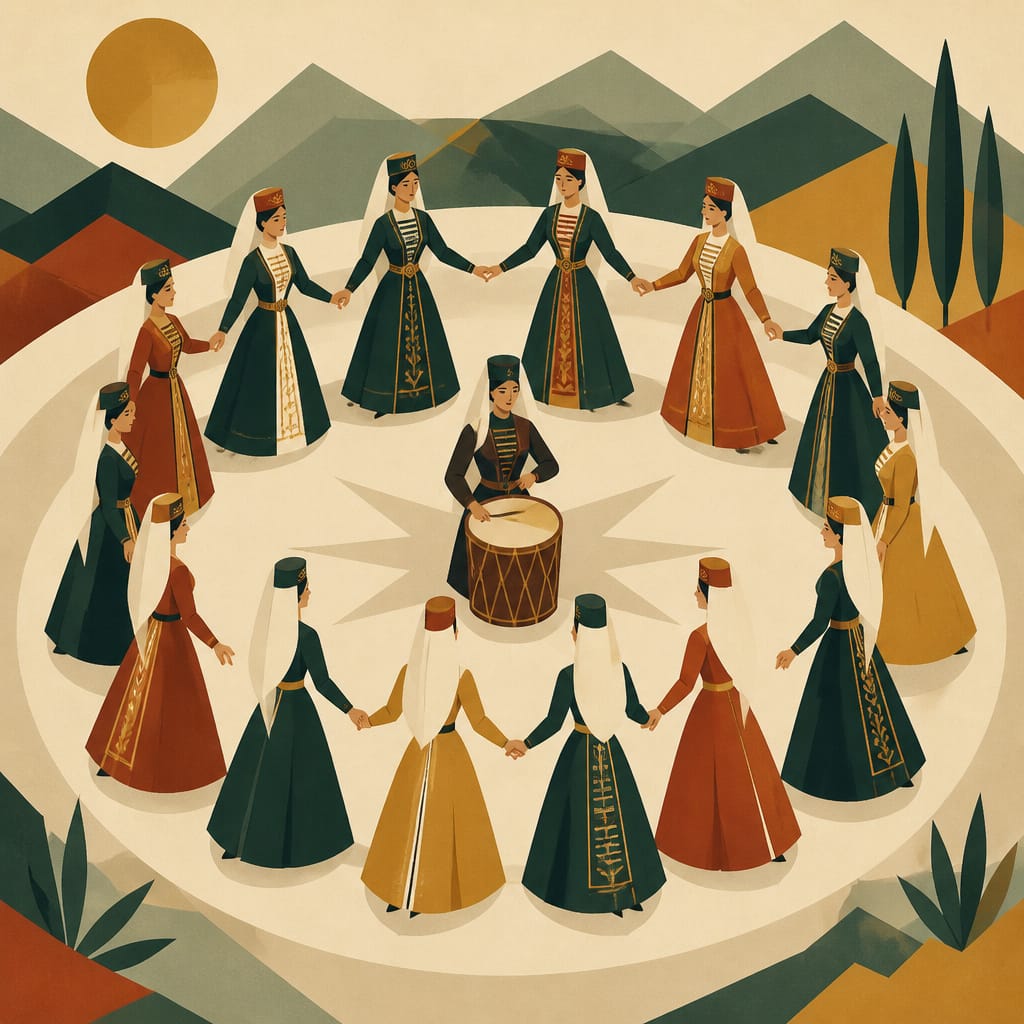
The Khurey (also udj khurey) is a circular dance performed at festivals, weddings, and communal rites. Dancers move slowly clockwise — the direction of the sun — holding hands or shoulders, sometimes with a drummer at the center.
The Khurey is more than folk dance. Its shape enacts the cosmology: a closed circle around a central axis, each participant equal, no one leading, no one following. It is Khabze made visible.
Major Festivals
Sacred Symbols
Circassian folk art is dense with symbols older than the ornaments they decorate. Ram horns, spirals, and sun rosettes appear on gravestones, saddlebags, embroidered belts, and silver niello — the visual grammar of Khabze.
Male vitality, wealth, protective force.
Tha's face — coherence, wholeness, the turning year.
The soul's journey; the coil of the serpent-river.
Vertical axis linking underworld, earth, and sky.
The zodiac of Circassian months; the fullness of time.
Sign of Tlepsh, patron of the smith.