The earth is not a resource. It is a partner.
Khabze's ecology and its ethics are one thing seen from two sides.
Environmental Ethics
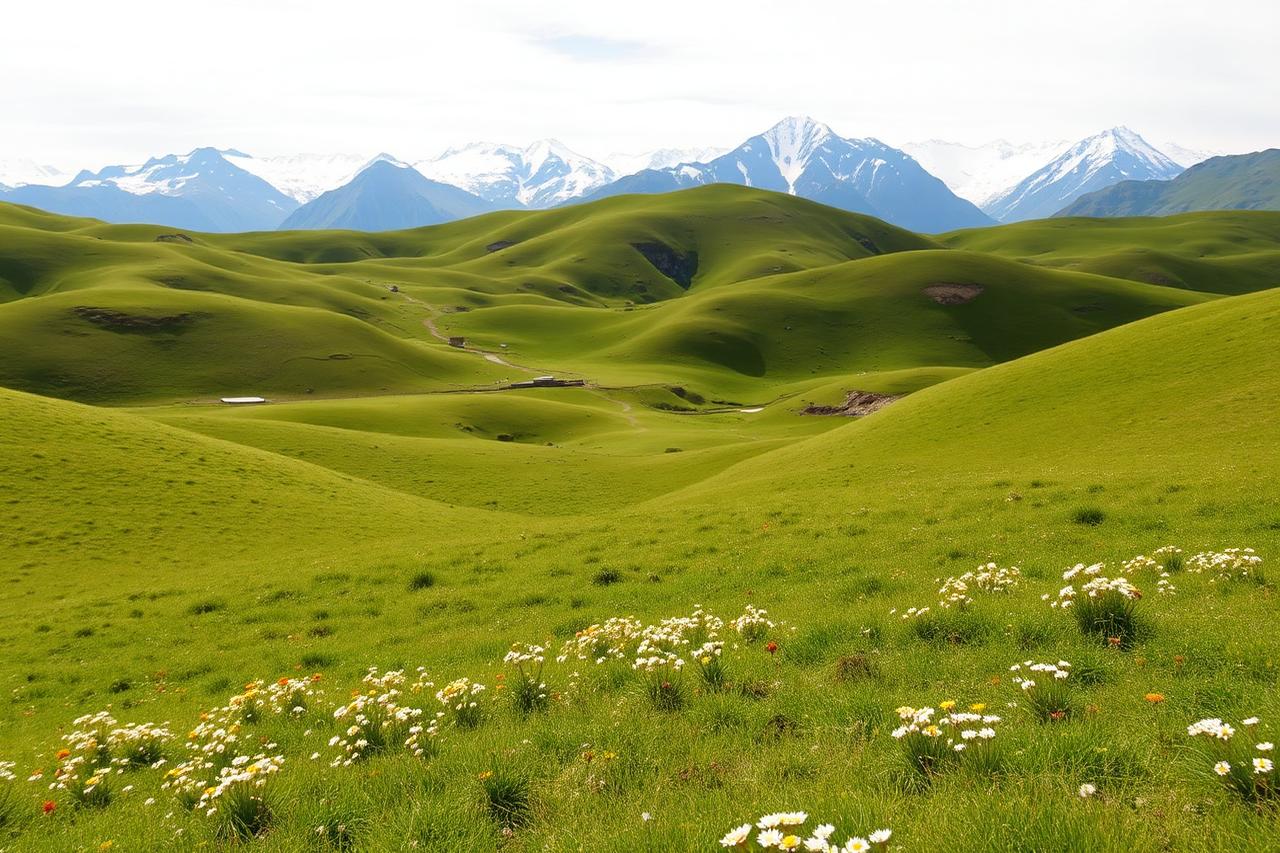
In Khabze, the natural world is not a stage on which human life is set. It is a community of counterparties — rivers, forests, animals, weather — each with standing, each owed acknowledgment. Nothing is taken without asking; nothing consumed without thanks.
Hunters traditionally address Mezythe before entering the forest and again before releasing an arrow. A tree felled for a house is thanked. A field harvested has a corner left uncut for the birds and the spirits of the land. Rivers are neither dammed carelessly nor fouled — to poison a stream is to break covenant.
This ethic long predates modern ecology, but it aligns with it precisely. Sustainability, in the Circassian sense, is not a policy. It is a manner.
Respect for Elders
To honor an elder is not a matter of politeness. In Khabze it is a matter of continuity. Elders are the living archive of a tradition transmitted almost entirely by mouth and by example. Without them, the chain breaks.
The customary practices are precise. One rises when an elder enters a room. One does not smoke, curse, or sit before an elder does. In counsel, the elder speaks last, and their word closes the matter. A young person's first act on returning to a village is to visit the household's oldest member.
The corresponding duty runs the other way. An elder is expected to be worth the deference — to be measured of speech, generous of judgment, and to carry the tradition without deforming it. Age alone confers no standing. Adygaghe does.