The mother of the Narts sits at the hearth.
In Khabze, the role of women is not equal in the modern liberal sense — it is elevated in an older sense that Western observers have often misread.
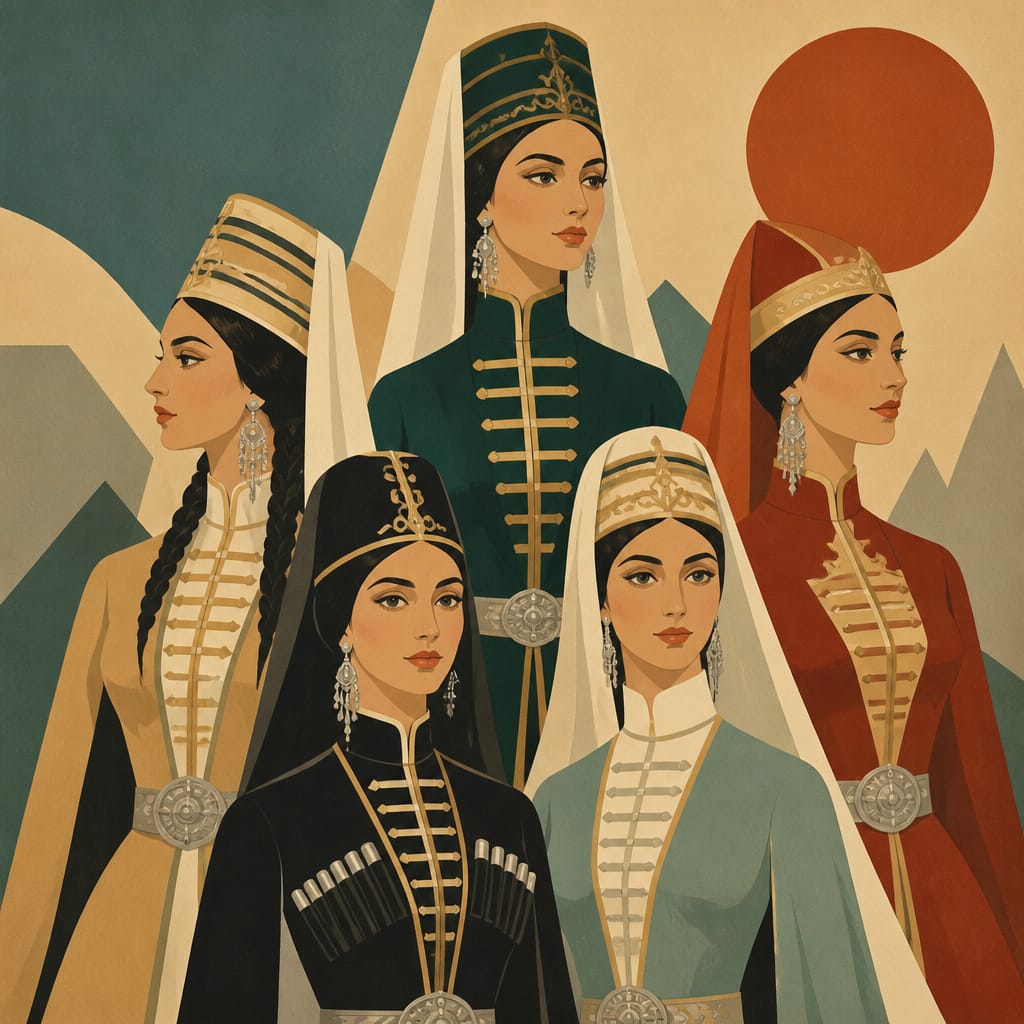
Sovereignty of the Woman
Historical Circassian society was strongly patrilineal, yet Khabze granted women a domain in which they were absolutely sovereign. A woman's word within her household was not questioned. A woman on horseback in her own right — an Adyge Guashe — commanded the deference of any man she met on the road.
Violence against a woman was considered a stain that fell not only on the perpetrator but on his lineage. To insult a woman in public was to invite the intervention of every man present, whether related or not. The old proverb runs: “A people that dishonors its women has already lost its mountains.”
Setenaya — The Sacred Archetype
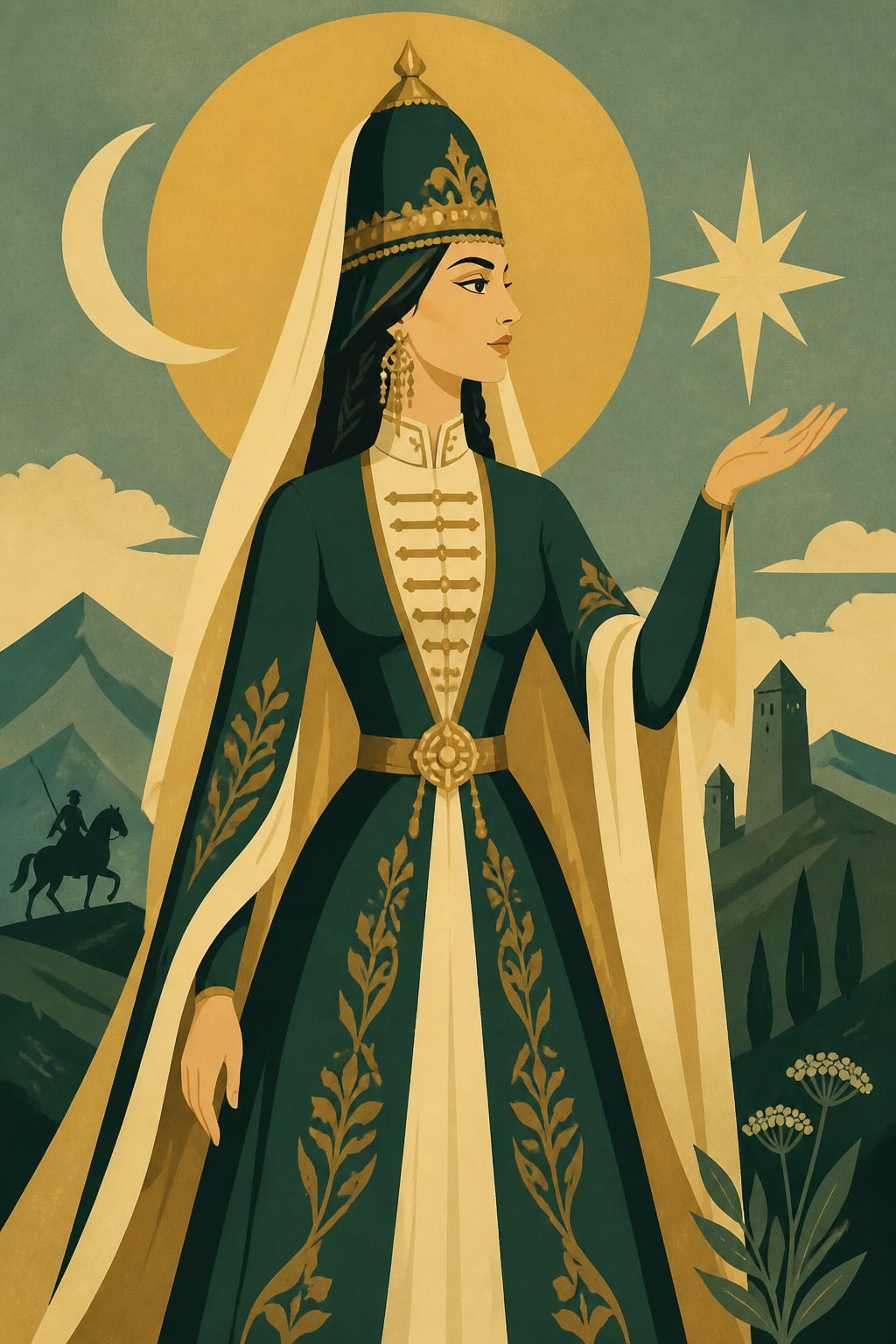
The mythic exemplar is Setenaya, the mother of the Narts. She is not a warrior-queen in the Amazonian sense (though the Nart cycle has those, too — most famously the sword-maiden Adiyuh). She is a stranger and older figure: the source of counsel, the arbiter of disputes, the one whose loom weaves fate itself. Even the great Nart heroes come to her for judgment.
Setenaya is the pattern beneath Khabze's daily practice: the woman as the still center around which the household — and by extension the tribe — organizes itself.
In Practice
- A woman entering a room is greeted first, and everyone rises.
- Feuds and blood-debts are suspended in the presence of a woman; she can end a fight by throwing her scarf.
- The hearth-goddess Hedryhe is women's particular patron; her festival is a women's rite.
- Traditional courtship requires a young man to demonstrate Adygaghe — bearing, restraint, generosity — over years, not months.
- Divorce, though rare in the historical record, was a woman's right as much as a man's.