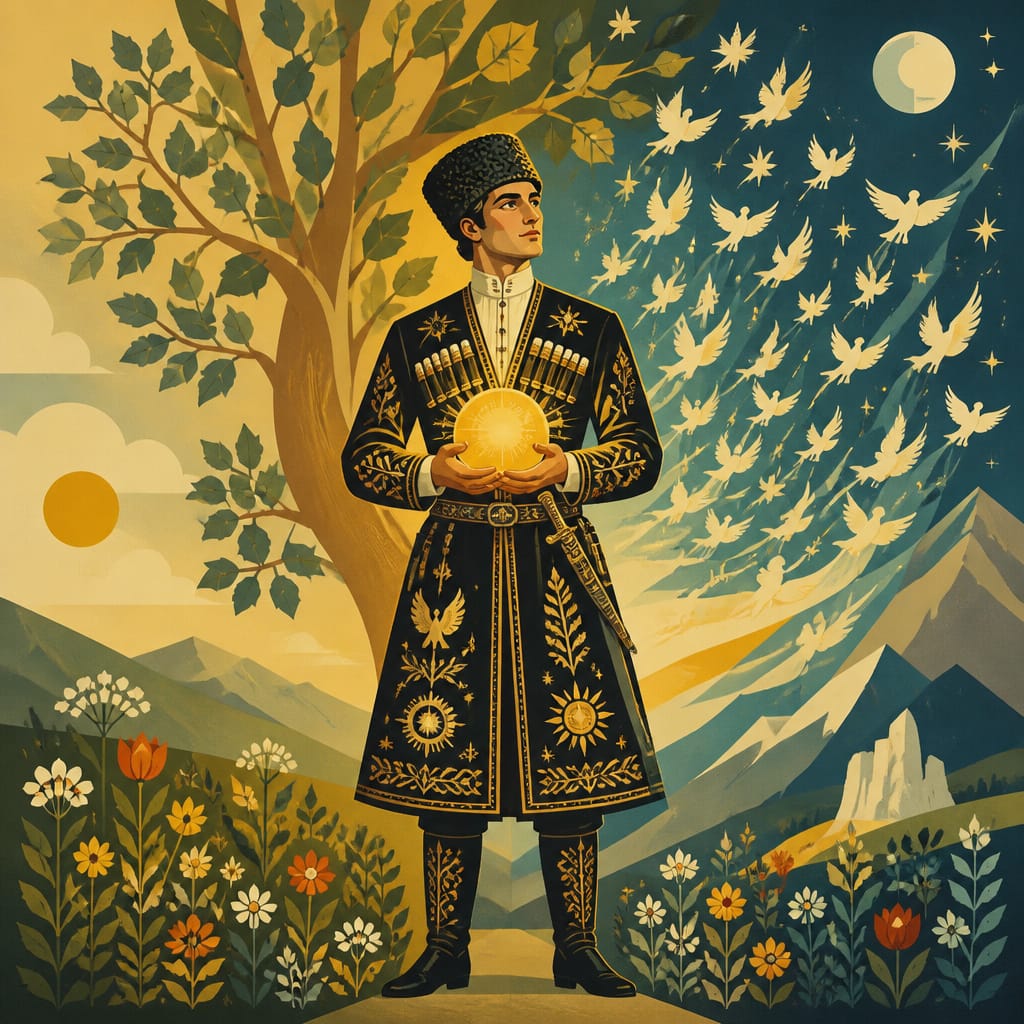
Psetha
The God of Life and Souls.
Mythology
Psetha gives the psa — the breath-soul — and takes it back. Circassian speech is full of him: greetings and blessings still invoke the soul's wellbeing. Where Hedrixe keeps the dead, Psetha governs the living spark itself.
He is depicted holding light, standing between the day side and the night side of the world. Birth, breath, recovery from illness, and the moment of dying are all his.
Sacred Correspondences
- ·The soul and the breath
- ·Birth and naming
- ·Recovery from illness
- ·The threshold between day and night
- ·Doves
- ·The birthing room and sickroom
- ·Dawn and dusk
- ·The breath itself
- ·A candle lit for someone ill
- ·The naming of a newborn spoken aloud
- ·White bread
- ·Sitting with the dying
- ·White
- ·Dawn gold
- ·Dove grey
- ·One (the single breath)
- ·Three
- ·Do not curse a person's soul or life.
- ·Do not wish death on anyone, even lightly.
- ·Do not leave a dying person alone if you can help it.
- ·Do not treat a birth or death as ordinary business.
Establishing a Relationship
Psetha is approached through breath and attendance. A daily breathing practice, done at dawn or dusk, is the traditional shape of it.
Be present at the hard thresholds in other people's lives — births, illnesses, deaths. Showing up is the whole devotion.
A Ritual
- 1At dawn or dusk, stand in an open doorway with light on one side and dark on the other.
- 2Light a single white candle and set it on the threshold.
- 3Breathe slowly and count: three breaths for those being born, three for the living, three for the dying.
- 4Name aloud anyone you know at one of those thresholds now.
- 5Say: "Psetha, the breath is yours; hold it steadily a while longer."
- 6Let the candle burn out, and then contact one of the people you named.
Rituals presented here are respectful reconstructions drawn from ethnographic description and contemporary Khabze practice, compiled by an outsider for educational purposes. Practice varies by family, village, and diaspora community.