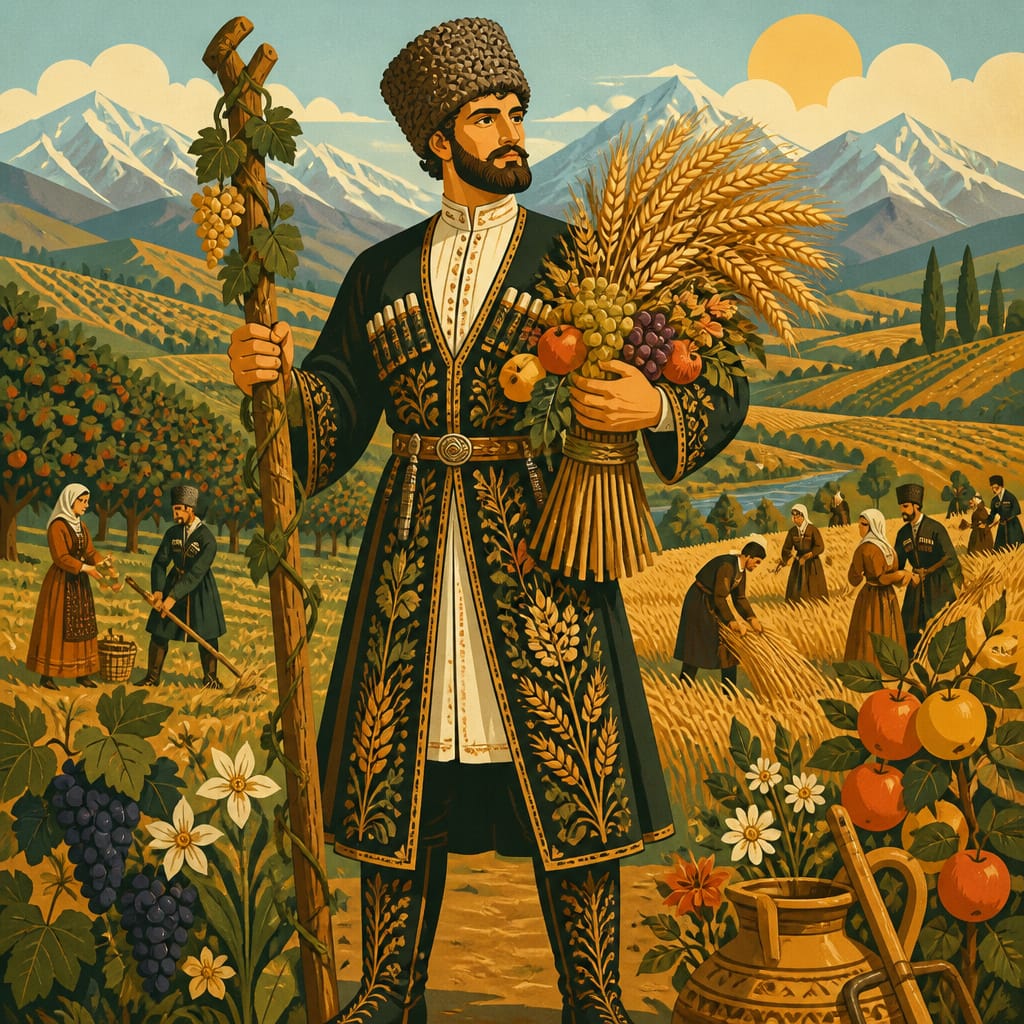
Thageledj
The God of Flora and Crops.
Mythology
Thageledj makes things grow. Where Sozeresh keeps the harvest once gathered, Thageledj governs the standing crop, the orchard in blossom, and the seed in the ground. The Circassian word for a millet field and the prayers said over sowing both carry his name.
He is invoked at ploughing and at first-fruits. The first sheaf and the first fruit of any tree belong to him before anyone eats.
Sacred Correspondences
- ·Grain, millet, orchards
- ·Sowing and first fruits
- ·Soil fertility
- ·Ploughing
- ·Seed
- ·Fields and orchards
- ·The furrow
- ·Seed stores in spring
- ·The first fruit of any tree, uneaten
- ·Seed scattered at a field edge
- ·Compost returned to soil
- ·Bread from your own grain
- ·Green shoot
- ·Earth brown
- ·Ripe gold
- ·Three (sow, tend, reap)
- ·Forty (days of growth)
- ·Do not eat the first fruit before it is offered.
- ·Do not poison or exhaust soil for a quick yield.
- ·Do not let a crop rot unharvested.
- ·Do not sow while angry.
Establishing a Relationship
Grow food — even a single pot. His relationship runs through the annual cycle: sow at the right time, weed without resentment, give the first of it away.
Compost. Learn where your food actually grew. Say a word over seeds before they go in the ground.
A Ritual
- 1At sowing time, turn a small patch of soil by hand, calmly; stop if you are angry.
- 2Hold the seed in both hands and name what you hope it will feed.
- 3Scatter a portion at the edge of the plot for Thageledj before sowing the rest.
- 4Say: "Thageledj, the first is yours."
- 5Tend it through the season without complaint.
- 6When it fruits, take the very first and give it away or return it to the earth — do not eat it.
Rituals presented here are respectful reconstructions drawn from ethnographic description and contemporary Khabze practice, compiled by an outsider for educational purposes. Practice varies by family, village, and diaspora community.