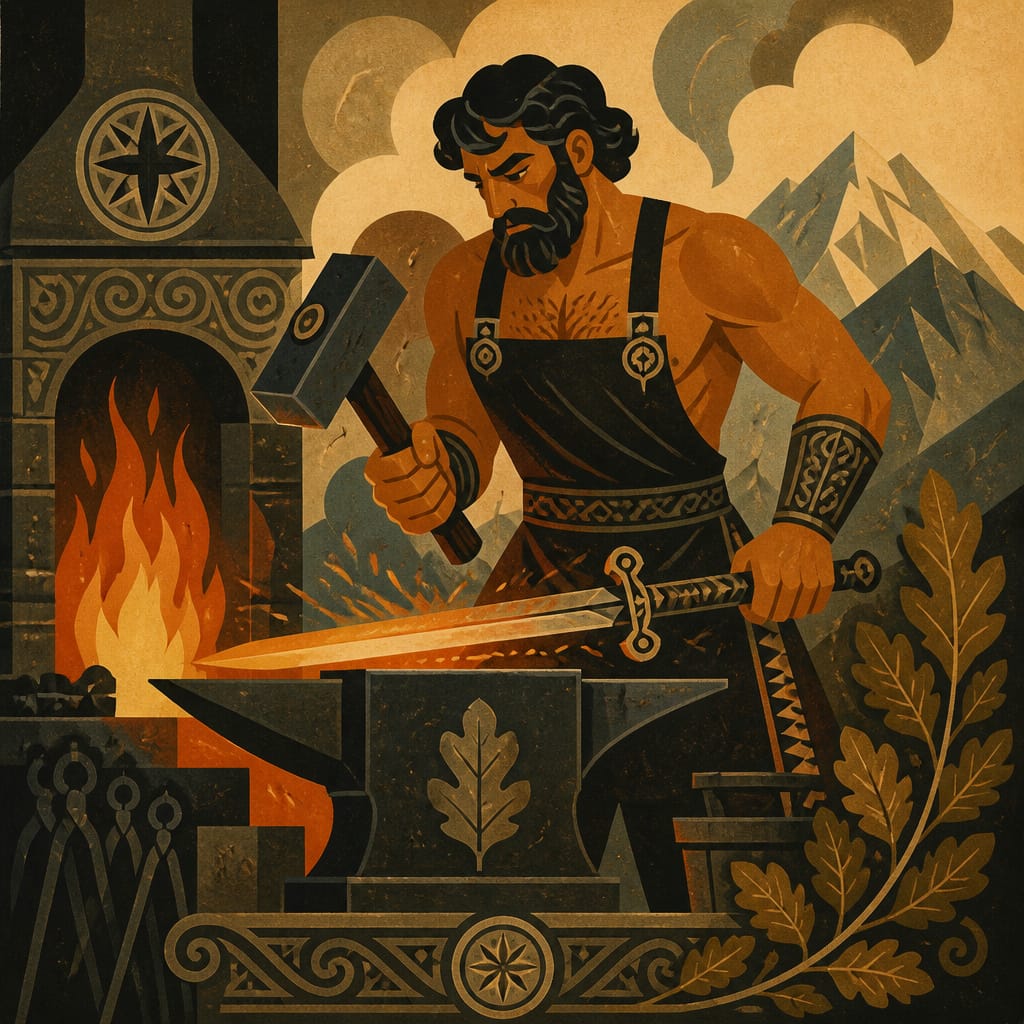
Tlepsh
Patron of iron, craft, and fire. Teacher of the Narts.
Mythology
Tlepsh is the smith who taught the Narts to work metal, and thereby to make both the plough and the sword. In the sagas he tempers the hero Batraz in his forge until the man himself becomes steel. His anvil is a place of oath and of healing; the smithy was, in the old villages, a kind of sanctuary where quarrels were settled and vows sworn on iron.
He is depicted as immensely strong but patient — the god of the thing done properly, slowly, at the right heat. Craftsmen of every kind, not only smiths, claim him.
Sacred Correspondences
- ·Iron and steel
- ·Fire and the forge
- ·Craft, skill, apprenticeship
- ·Healing of bones
- ·Oaths sworn on metal
- ·The smithy
- ·Volcanic and mineral places
- ·Workshops of every trade
- ·A well-made object, finished honestly
- ·Charcoal
- ·A nail driven into a post
- ·Water from the quenching trough poured out
- ·Forge red
- ·Black
- ·Bright steel
- ·Three (heat, hammer, quench)
- ·Nine
- ·Do not offer or display shoddy, unfinished work.
- ·Do not use a tool for the wrong purpose or leave it dirty and blunt.
- ·Do not lie while touching iron.
- ·Do not boast about a skill you have not put years into.
Establishing a Relationship
You reach Tlepsh through apprenticeship, not devotion. Take up a craft — smithing, woodwork, cooking, code, anything with a real standard — and submit to its discipline. Sharpen and clean your tools as an act of worship.
Keep one piece of iron on your working surface. When you are tempted to rush a finish, put your hand on it.
A Ritual
- 1Choose a piece of work you can complete in one sitting and do it to the best standard you can reach.
- 2Light a small fire or candle beside your workspace before you begin.
- 3Work in silence; do not talk while shaping.
- 4When finished, hold the object over the flame's heat and say: "Tlepsh, this is honest work."
- 5Quench your hands in cold water and pour the rest onto the ground outside.
- 6Give the object away, or put it into daily use — never store it as a trophy.
Rituals presented here are respectful reconstructions drawn from ethnographic description and contemporary Khabze practice, compiled by an outsider for educational purposes. Practice varies by family, village, and diaspora community.