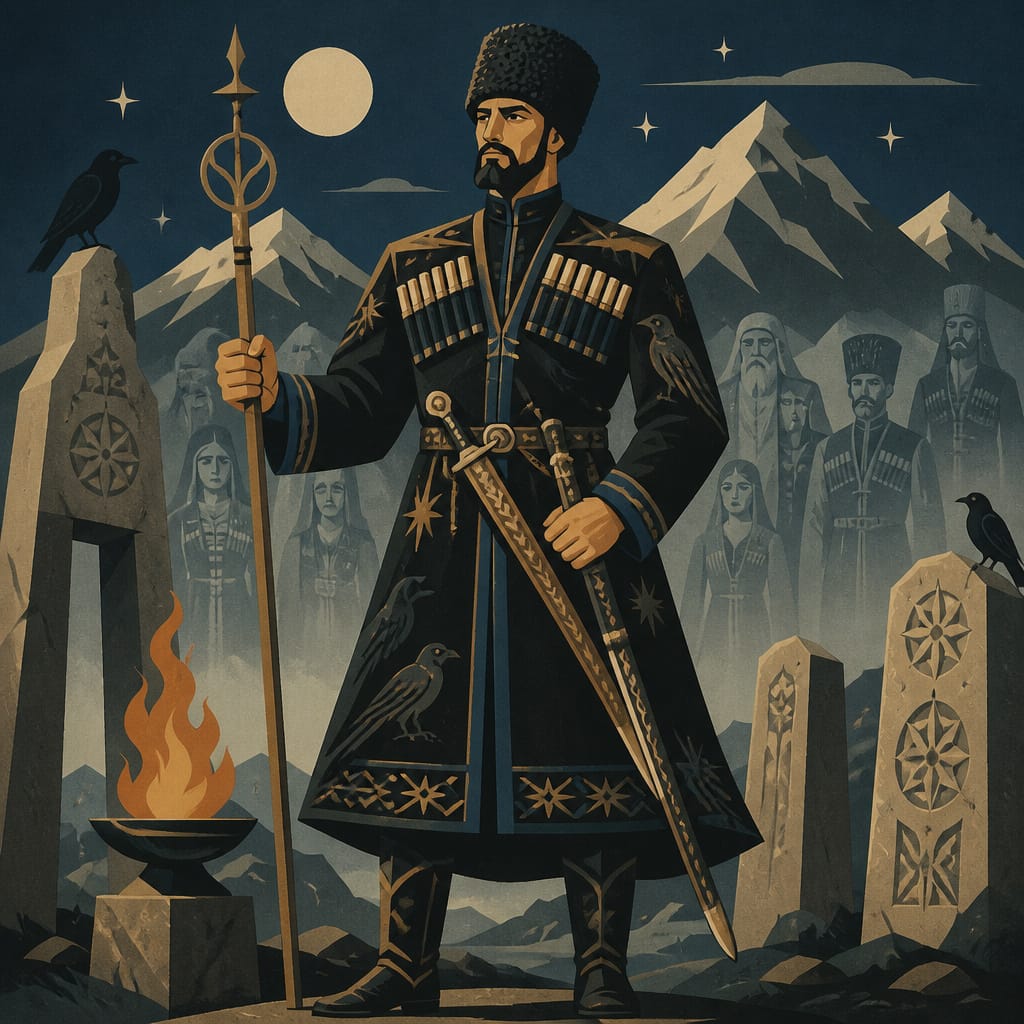
Hedrixe
The God and Protector of the Dead.
Mythology
Hedrixe receives the dead and guards them. He is not a punisher; Khabze has little interest in judgment after death. His work is custody — that the dead are kept, remembered, and not disturbed.
Funerary khabze is among the strictest of all the tradition's codes: the community feeds the bereaved family for days, the deceased is spoken of by name, and the memorial meals continue at fixed intervals for a year. Hedrixe presides over all of it.
Sacred Correspondences
- ·Death and burial
- ·Cemeteries and grave markers
- ·Memory and the naming of ancestors
- ·Mourning custom
- ·Stone monuments
- ·Graveyards
- ·The house during mourning
- ·The road the funeral takes
- ·A memorial meal with a place set for the dead
- ·Bread left at a grave
- ·Speaking the names of your dead aloud
- ·Tending a neglected grave
- ·Black
- ·Slate grey
- ·Deep indigo
- ·Forty (days of mourning)
- ·One year
- ·Do not disturb, deface, or photograph graves disrespectfully.
- ·Do not speak ill of the dead.
- ·Do not attempt to summon or compel the dead.
- ·Do not leave a bereaved family unfed or unvisited.
Establishing a Relationship
Hedrixe is approached through remembrance, not contact. Learn your own dead: names, dates, one true story each. Write them down so the list outlives you.
Keep a fixed date in the year for your memorial meal and never miss it. Care for a grave that no one else visits.
A Ritual
- 1Set the table with one more place than there are living guests.
- 2At the empty place, put bread, water, and a lit candle.
- 3Before anyone eats, each person names one of their dead aloud and says one true thing about them.
- 4Eat the meal without hurry; do not toast to sorrow.
- 5Say: "Hedrixe, keep them well; we have not forgotten."
- 6Leave the bread and water out overnight and put them outside or on the earth in the morning.
Rituals presented here are respectful reconstructions drawn from ethnographic description and contemporary Khabze practice, compiled by an outsider for educational purposes. Practice varies by family, village, and diaspora community.